A person who reads the Quran carefully for the first time often discovers something surprising. The text does not behave like the religion they absorbed through family custom, social media, or fragments from debate clips. It is something else — a sustained, direct, often arresting address from God to humanity, moving between argument, warning, promise, parable, law, and cosmic description without the transitions a human author would provide.

Why the first reading can disturb
The Quran disturbs because it does not accommodate the reader. It does not introduce itself gradually. It does not build characters or develop a plot. It assumes the reader already knows the stories of the prophets and proceeds to comment on them, reframe them, and draw lessons from them. For a reader trained on Western literary conventions — beginning, middle, end, character development, narrative arc — the Quran can feel disorienting, repetitive, or fragmented.
It also disturbs because its voice is uncompromising. The Quran does not present itself as one perspective among many. It presents itself as the word of the Creator of the universe, addressed to every human being, demanding a response. That voice — confident, urgent, unhedged — either strikes the reader as authentic or as insufferable. There is very little neutral ground.
Why the same reading can illuminate
Readers who persist past the initial disorientation often report a different experience. The Quran’s thematic coherence emerges — the same core ideas (God’s oneness, human accountability, the reality of the unseen, the purpose of creation) surface again and again from different angles, in different contexts, building a cumulative case that no single passage contains. The Arabic, even for non-Arabic speakers hearing a recitation, carries a musicality and compression that translation cannot reproduce.
The Quran’s voice is not merely informative. It is normative. It does not simply describe the world — it commands a response. This is what the Islamic tradition means by God as the core of normativeness: every attribute of God, once recognised, functions as an imperative. To learn that God is just is to know that justice is required of you. To learn that God is merciful is to know that mercy is required of you. The Quran communicates this normativeness on every page. It addresses the reader not as a spectator of theological information but as a khalifah — a moral agent who must decide, and who will be held accountable for the decision.
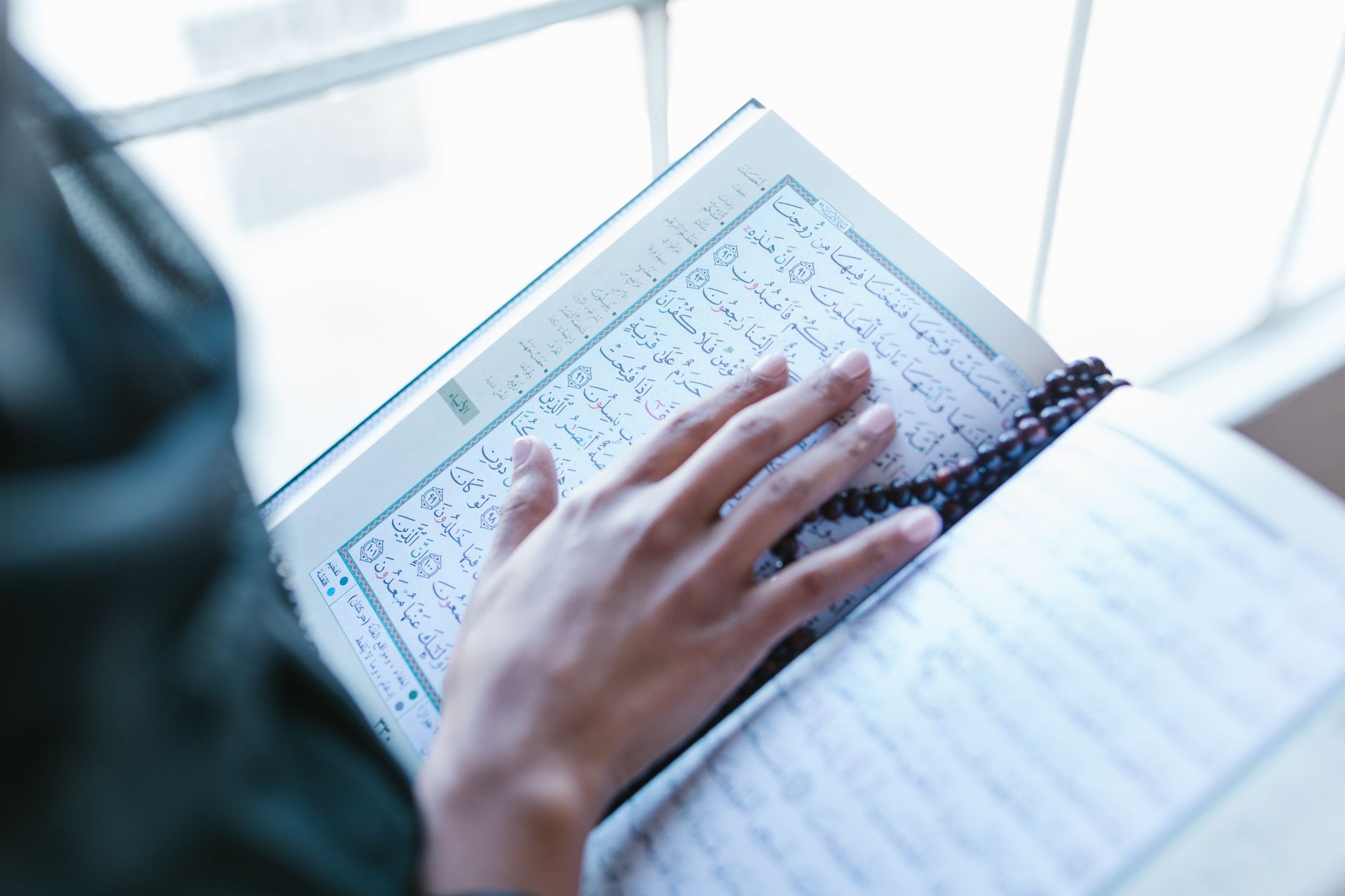
The Quran’s literary challenge — “produce a surah like it” — is not merely a boast. The Arabic text operates at a level of linguistic density, rhythmic structure, and semantic layering that fourteen centuries of Arabic literature have not replicated. This claim is debated, of course. But the reader who encounters the Arabic for the first time, even without full comprehension, often senses that something unusual is happening in this text.
The unity of the text
The principle of the unity of truth is embedded in how the Quran presents itself. The text invites scrutiny. It challenges the reader to find internal contradiction. It presents itself as a coherent whole — a single revelation from a single source, preserved without editorial councils, without redaction committees, without the centuries of compilation that characterise other scriptures. Whether the reader accepts this claim or not, the Quran’s self-presentation is remarkably consistent and remarkably confident.
For the reader approaching Islam for the first time, the Quran is the primary evidence. Not what Muslims say about the Quran. Not what critics say about the Quran. The text itself. The honest approach is simple: read it as a claimant, not as a specimen. Let it say what it is trying to say. Then decide whether a book with this voice, this unity, and this self-possession is more likely to be late human manufacture or revelation addressed to all of humanity.

What the Quran does differently
Readers familiar with the Bible often expect the Quran to operate the same way — as a collection of books written by multiple authors across centuries, compiled by editorial committees, and reflecting the literary conventions of its various periods. The Quran is none of these things. It is a single text, from a single claimed source, delivered through a single messenger over 23 years, with no editorial council, no redaction history, and no disputed canon.
This makes the Quran easier to evaluate and harder to dismiss. There is no question of which Gospel is more reliable, which epistle is pseudepigraphal, or which passage was added by a later scribe. There is one text. The question is simply: is this text what it claims to be?
The Quran’s own answer to that question is characteristically direct. It does not ask you to accept it on authority. It asks you to examine it. It challenges you to find contradiction. It points to the natural world as corroborating evidence. It invites comparison with other texts. This posture — a text that presents itself as revelation and simultaneously demands critical engagement — is unusual among scriptures. Most ask for faith first. The Quran asks for investigation first and promises that investigation will confirm it.
Whether that promise holds is something only the reader can determine. But the approach itself — the willingness to be tested — is worth noting. A human fabrication would be unlikely to invite the kind of scrutiny the Quran invites, because a fabrication could not survive it. The Quran’s confidence in its own integrity is either the greatest bluff in literary history or evidence that its Author knew it would hold up.
The Quran is not an easy read. It was not designed to be. It was designed to be a profound encounter with a voice that claims to be God’s. Whether that claim is true is something the reader must decide — but the decision should be based on a genuine encounter with the text, not on fragments, not on summaries, and not on what other people say it contains. The Quran invites you to read it. The least you owe it — and yourself — is to accept the invitation before reaching a verdict.
One final note for the reader approaching the Quran from a scientific or philosophical background. The Quran does not argue the way a Western philosophical text argues — with premises, inferences, and conclusions laid out in sequence. It argues the way a courtroom witness argues: by pointing, repeatedly and from different angles, at evidence the reader can verify. “Look at the heavens.” “Look at your own creation.” “Look at the earth after rain.” The evidence is always external, always checkable, always addressed to a reader who is assumed to be capable of independent judgement. That mode of address is itself a datum worth considering.