The Quran makes a striking claim about itself: that its preservation is divinely guaranteed. Historical reliability is one of the criteria that a genuine divine communication would need to meet. If what exists today is substantially different from what was originally revealed, the evidential value of the text is correspondingly diminished. The question of how the Quran was transmitted and preserved is central to the evaluation of the Islamic claim, rather than merely academic.
The verse is the Quran’s own claim about itself. The empirical record of its preservation is the place where the claim can be evaluated.
The transmission method
The Quran was transmitted through two parallel channels simultaneously from the very beginning: memorisation and writing. Memorisation was primary in the oral culture of seventh-century Arabia, where the precise oral transmission of poetry was a sophisticated art form. From the beginning of the Quranic revelation, memorisation was actively cultivated. The Prophet explicitly encouraged the memorisation and regular recitation of the text.
At the same time, the text was written down. Multiple companions of the Prophet maintained written records of the revelations. Writing and memorisation checked each other, rather than being alternatives. The tradition of oral recitation allowed errors in written manuscripts to be identified and corrected. Written texts provided fixed points of reference for the oral tradition.
The Prophet on the Quran’s recitation
The Prophet ﷺ established the structural importance of memorisation and recitation as the primary mode of preservation:
The hadith establishes the social structure that produced the Quran’s preservation. The mechanism for transmission was a community in which the highest religious praise was attached to the learning and teaching of the text itself, rather than a small priestly caste with an exclusive grip on the text. From the Prophet’s lifetime onward, every generation has produced thousands of ḥuffāẓ (those who have memorised the entire Quran) whose memorised texts function as a continuous, distributed verification system. The hadith identifies the social mechanism that, combined with the written tradition, produced the preservation that the historical record now confirms.
The standardisation process
Within two decades of the Prophet’s death, a standardised written text (the ʿUthmānic codex) was produced by a committee that cross-referenced all available written sources with the memorised tradition. Multiple copies were sent to major centres of the early Muslim world. Earlier written versions with variant orthographies were retired.
This process is sometimes presented as evidence of editorial manipulation. The opposite is more accurate. The process was transparent, conducted by companions who had direct knowledge of the original, and involved cross-checking between the written and memorised traditions. The variants that existed were orthographic (differences in how the same consonantal text was written, rather than differences in what the text said). The consonantal skeleton of the text has remained unchanged from the earliest extant manuscripts to the present day.

The manuscript evidence
Manuscript evidence of the Quran dates to within a generation of the Prophet’s death. Carbon-14 dating of early Quranic manuscripts has consistently placed them in the first century of the Islamic era. The textual consistency across manuscripts from different regions and centuries is remarkable by any standard of ancient textual transmission.
Compare this with other ancient religious texts. The earliest complete manuscripts of the New Testament date from approximately three centuries after the events they describe. The gap between the events and the documentation is much longer, and the textual variation across manuscripts is more extensive. The comparison is something other than a charge against Christianity. It is a comparison that helps contextualise the Quran’s unusual preservation history.
What the Birmingham manuscript adds
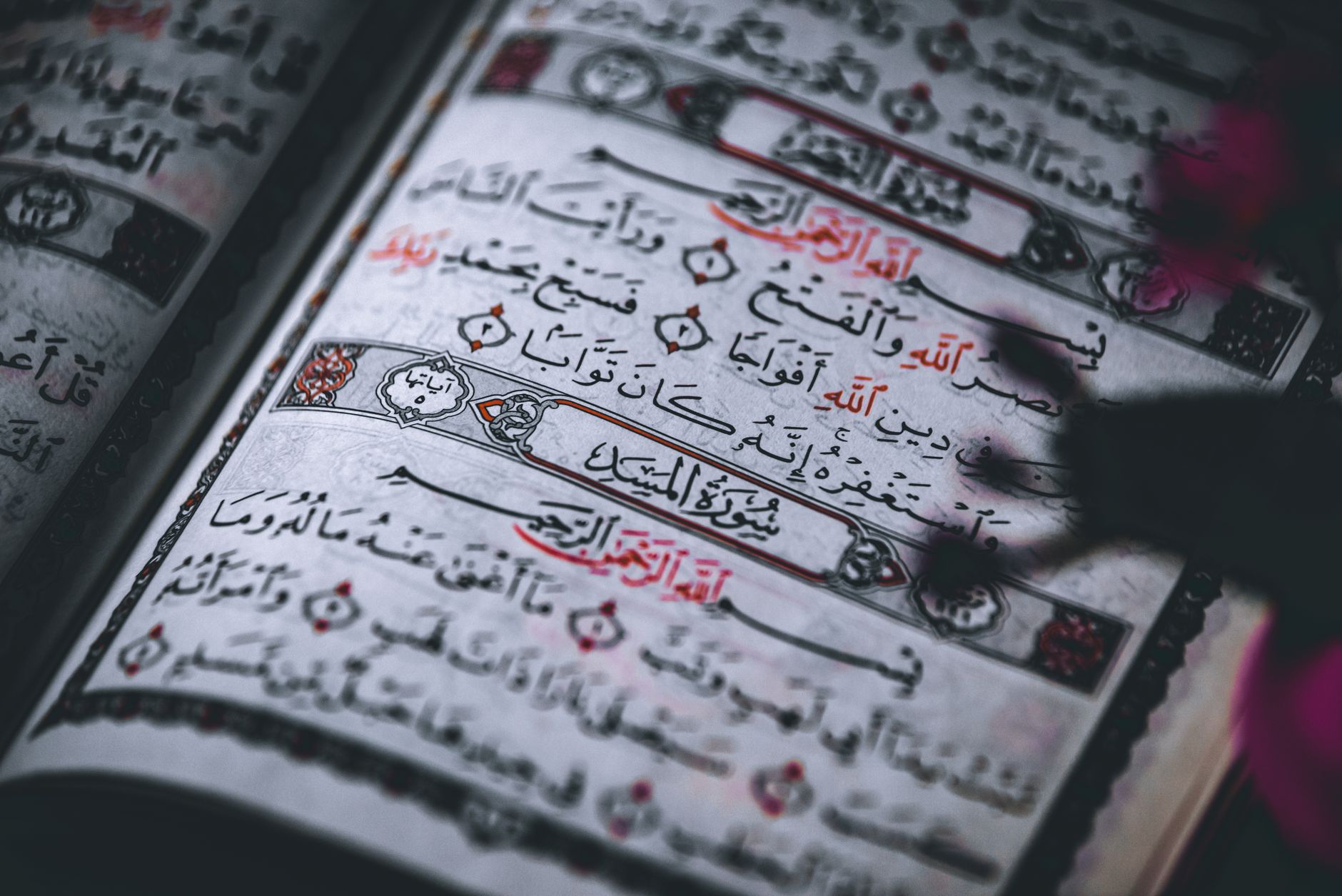
In 2015, fragments of a Quranic manuscript at the University of Birmingham were carbon-dated with 95.4% probability to between 568 CE and 645 CE. The Prophet Muḥammad ﷺ is traditionally reported to have lived from 570 CE to 632 CE. The dating range overlaps with the Prophet’s own lifetime. The manuscript fragments correspond exactly to the modern Quranic text. The find is significant precisely because it removes the speculative space in which a later editorial reshaping could plausibly be hypothesised.
The text the Birmingham manuscript preserves is the text that has been recited and copied without substantive alteration since the seventh century. This is the kind of evidence one expects to find for a text whose transmission has been continuous and faithful since its origin, rather than the kind of evidence one expects to find for a heavily edited text.
What this establishes
The historical evidence establishes with high confidence that the text of the Quran available today is substantially the same as the text that was recited in the seventh century. Whether that text has a divine origin is a separate question. The prior question (whether it has been faithfully preserved) can be answered positively with a degree of confidence that few ancient texts can match.
These considerations reach beyond generic theism. They point toward a Creator who grounds order, intelligibility, and obligation in one source. Once that much is granted, the question is which vision of God best matches the world those arguments disclose, rather than whether revelation matters.
Why ʿUthmān burned the other copies
Critics often present the third caliph’s order to burn other copies of the Quran as an admission that the text was in disarray. The report in Ṣaḥīḥ al-Bukhārī describes what happened and why. Ḥudhayfah ibn al-Yamān, returning from campaigns in Armenia and Azerbaijan, warned ʿUthmān that soldiers from Syria and Iraq were quarrelling over how to recite. ʿUthmān borrowed the sheets compiled under Abū Bakr, which were kept by Ḥafṣah, had a committee led by Zayd ibn Thābit copy them into standard volumes, returned the sheets to Ḥafṣah, sent a copy to each province, and then gave this order:
The source of the standard copies was the compilation already made under Abū Bakr within two years of the Prophet’s death, and the purpose of the burning was to end disputes over personal copies that mixed recitation variants, notes and dialect spellings. The report preserves dissent too. ʿAbd Allāh ibn Masʿūd objected that a younger man had been put in charge of the work, and al-Zuhrī adds that the most senior companions disapproved of Ibn Masʿūd’s position (Jāmiʿ al-Tirmidhī 3104). A tradition that records the objections of a leading companion alongside the decision is behaving as an honest record does. The burning standardised a text the community already shared.
The framework
The principle of the unity of truth is embedded in this question. If God authored both the Quran and the natural world, then the methods of historical and textual verification (applied honestly) should confirm rather than undermine the Quran’s claim to preservation. The Muslim who submits the Quran to textual scrutiny is exercising īmān (the rational appropriation of truth through evidence), rather than betraying faith.
The preservation of the Quran is something more than merely a historical claim. It follows from the principle that truth, once revealed, must remain accessible: that a God who speaks does not allow His speech to be lost or corrupted. If the unity of truth holds, the same God who authored the natural world authored this text, and the care He shows in sustaining the laws of nature He shows in sustaining His revelation.