The objection states itself simply: the Quran says human beings were created from clay (32:7), from a clot of blood (96:2), from water (21:30), and from dust (3:59). Four different answers to the same question. If an all-knowing God wrote this book, surely He would give one correct answer. The objection sounds decisive. It rests on a misreading of how the Quran speaks about origins.
What kind of text is the Quran?
The Quran is not a biology textbook. It does not set out to give a single technical account of human biochemistry in sequential form. It is a text addressed to the full range of human experience — speaking to philosophers, peasants, poets, grieving parents, and curious children — across multiple modes simultaneously: legal, devotional, narrative, ethical, and cosmological. When the Quran describes human origins, It is addressing different dimensions of the same reality for different purposes in different contexts.
The objection treats these descriptions as competing answers to the question “what is the technical substrate of human biology?” But that is not what any of these passages are asking. Reading them that way is like reading four poems about autumn — one about falling leaves, one about cold air, one about the harvest, one about mortality — and concluding they contradict each other because they describe different things.
What each description is actually doing
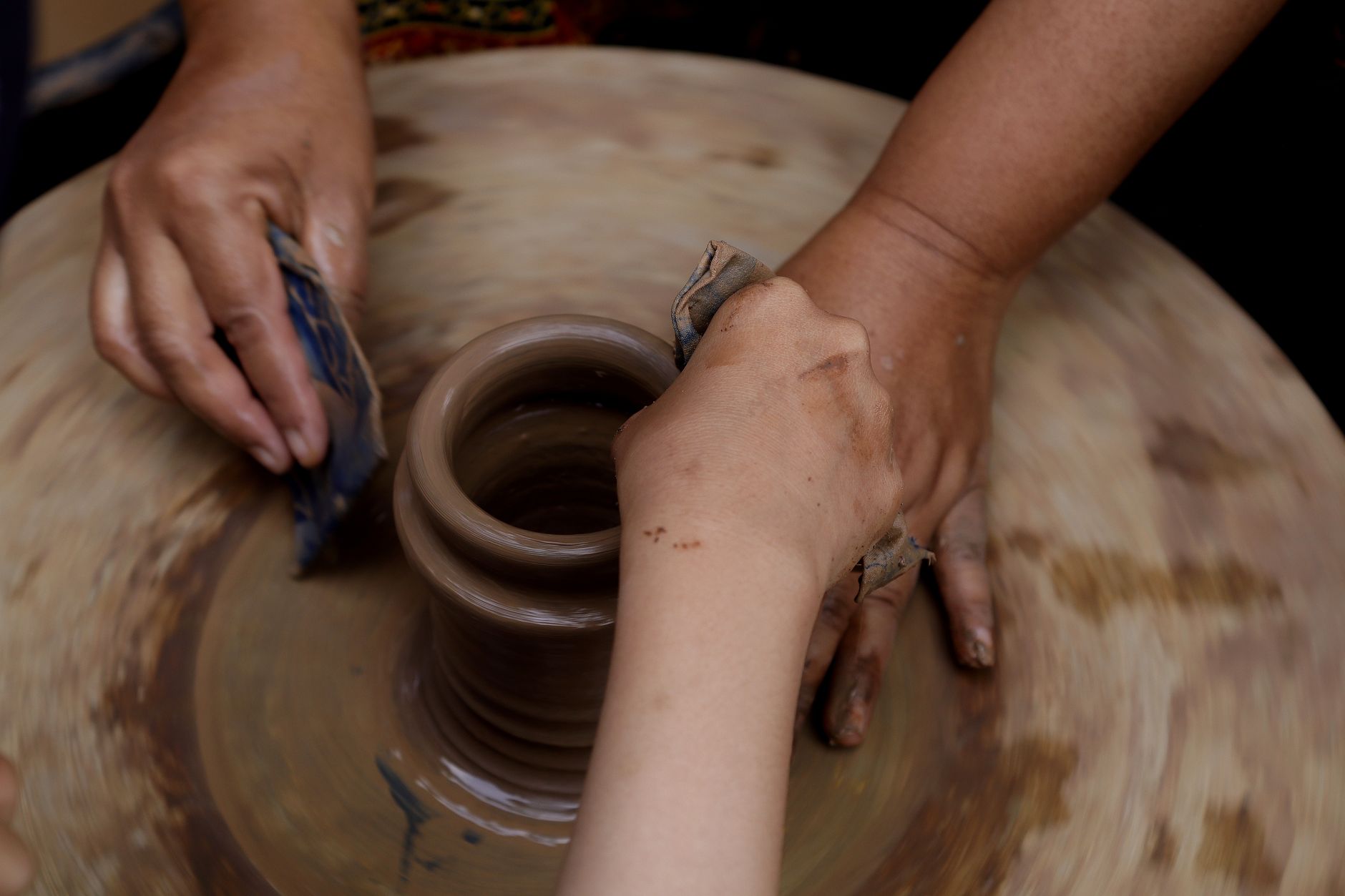
Dust and clay address the elemental origin — the raw material from which Adam was formed and to which every body returns. “From dust you came and to dust you return” has a conceptual equivalent across traditions because it is addressing origin and destiny at the level of basic matter.
Water — “We made every living thing from water” (21:30) — addresses the biological constitution of life. Every living organism is substantially water. In the context of a verse that immediately follows the mention of the heavens and earth being joined and then separated, this is a statement about the common substrate of all life, not a competing account of the first human’s creation.
A clot of blood (more accurately, a hanging or adhering thing — the Arabic alaqa can mean clot, leech-like attached form, or something that clings) appears in the context of embryological development. This is the description of the biological process of human formation in the womb, addressed in a passage that unfolds stage by stage: fluid, then adhering form, then chewed-like form, then bone, then flesh.
These are not four answers to one question. They are four lenses on the same reality, each appropriate to the context in which it appears.

Classical exegesis has never treated this as contradictory
Over fourteen centuries of Quranic scholarship — across wildly different schools, methodologies, and theological positions — not a single mainstream exegete treated these descriptions as contradictory. That is not because scholars were blind. It is because anyone who reads the passages in their actual context, rather than lifting them out and lining them up as list items, can see immediately that they are addressing different aspects of the same question. The apparent contradiction is a product of stripping context, not of reading the text.
What the objection reveals about the objector
The “four contradictions” argument reveals a reading method, not a Quranic problem. Applied consistently, the same method would produce “contradictions” in almost any sophisticated text. Shakespeare’s Hamlet describes human beings as “the beauty of the world, the paragon of animals” in one breath and “quintessence of dust” in another. Is this a contradiction? Only if you refuse to read contextually.
The question worth asking is not whether the Quran gives one technical answer or four contextual ones. It is whether the text, read as the kind of text it is, makes coherent sense. Fourteen centuries of serious readers across multiple intellectual traditions have concluded that it does. The apparent contradiction dissolves as soon as one reads with the same contextual intelligence one would bring to any other complex text.