The Quran presents an unusual argument for its own divine origin. It does not rest primarily on miracles, on prophecy fulfilled, or on the authority of its transmitter. It rests on itself: on the claim that its literary character is itself evidence of non-human authorship, and that any reader with sufficient Arabic can verify this by attempting to produce something comparable.
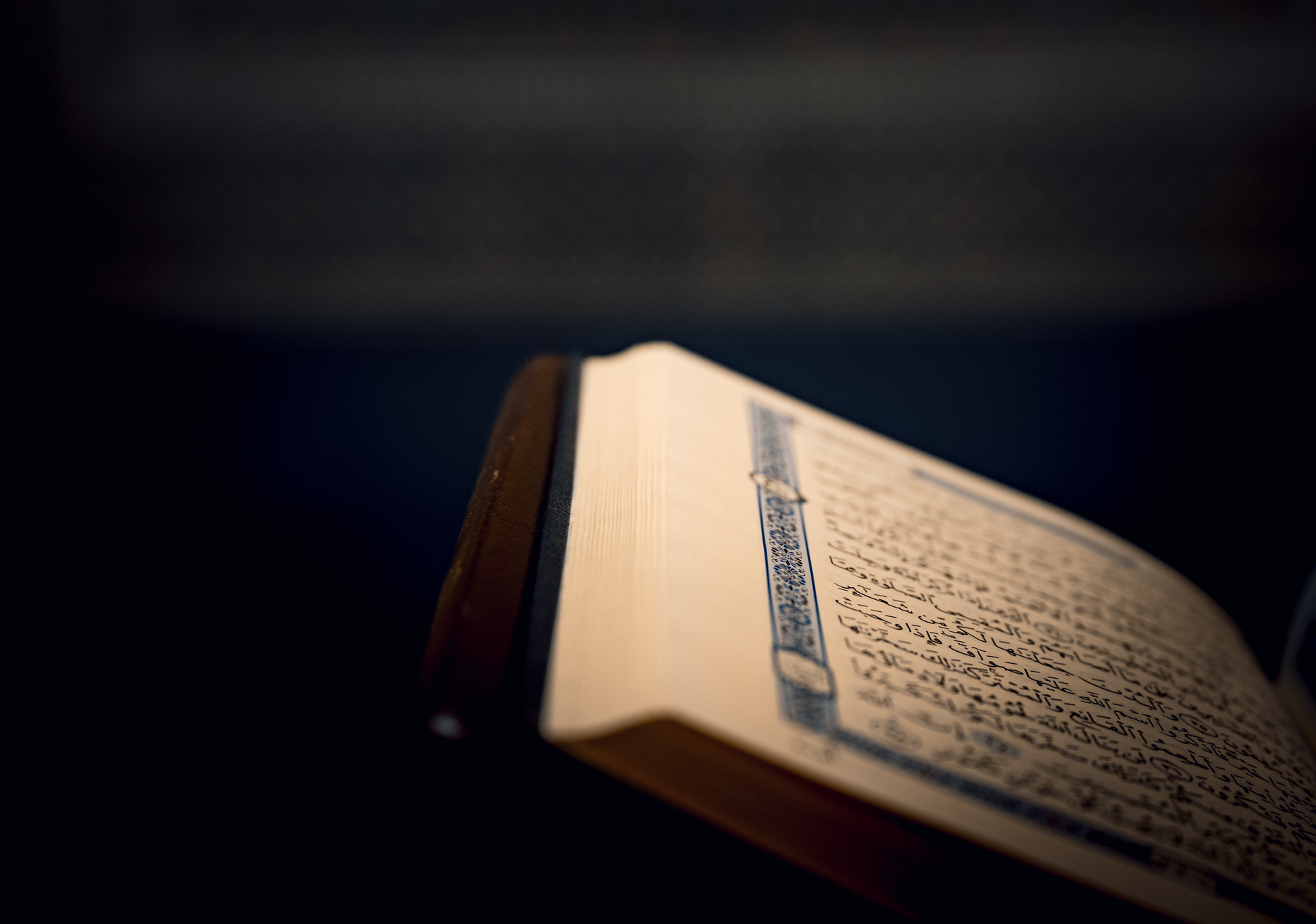
This is the doctrine of iʿjāz al-Qurʾān (the inimitability of the Quran). It is central to the Islamic understanding of what the Quran is and how its divine origin is to be understood.
What the challenge is
The Quranic challenge, issued repeatedly in the text itself, is to produce a sūrah (a chapter) of comparable quality. The challenge is for a single chapter rather than the entire Quran. The shortest chapter in the Quran is three verses. The challenge is a literary challenge to produce Arabic prose of the form, quality, and character that the Quran exemplifies, rather than a challenge to match the Quran’s religious content or its legal prescriptions.
The challenge was issued to the most gifted Arabic poets and rhetoricians of the seventh century: a culture that valued linguistic mastery above almost any other achievement, that had developed the most sophisticated oral-poetic tradition in the ancient world, and that had direct motivation to meet the challenge. If the Quran could be matched, the claim of divine origin was undermined. It was never matched.
What makes the Quran distinctive
Classical Arabic scholarship has attempted for fourteen centuries to articulate what it is about the Quranic text that resists replication. Several features have been identified. The Quran occupies a literary register that does not correspond to any existing Arabic form: it is something that combines the rhythm and sonic quality of verse with the semantic density and legal precision of elevated prose, rather than poetry or prose in the conventional sense. This combination had no precedent in Arabic literature and has had no successful imitation.
The text maintains a consistency of register, imagery, and thematic development across twenty-three years of composition in radically different circumstances (times of persecution, migration, war, social transformation) that is very difficult to explain on the hypothesis of gradual human composition under pressure. The internal cross-references and thematic unity of a text delivered in fragmentary oral units over more than two decades is a literary phenomenon that requires explanation.
The Prophet on the Quran’s nature
The Prophet ﷺ identified the Quran’s distinguishing feature in terms that bear directly on the literary argument:
The hadith establishes the structural distinction between the Prophet’s primary sign and the signs given to earlier prophets. The earlier prophets received miracles bound to their lifetimes (Moses’ staff, Jesus’ healing, the visible interventions in the natural order). The Prophet Muḥammad’s primary sign is the Quran itself, which is, on the hadith’s framing, the kind of sign that operates differently from the bounded miracles of earlier prophets.
The miracles of earlier prophets were witnessed by their immediate communities and then passed into testimony. The Quran is a sign that remains continuously available to every generation that encounters it. The literary argument the article is making is simply the working out, in detail, of what the Prophet’s hadith identifies as the Quran’s distinguishing feature: that it is a permanent, continuously verifiable sign rather than an event in the past.

The “iʿjāz disappears in translation” objection
A common version of the critique runs: if the Quran’s literary inimitability is real, it should survive translation. It does not. Therefore the inimitability is illusory. The argument is sometimes presented as a knockdown.
The argument misunderstands the claim it is meant to refute. Literary inimitability, by definition, is a property of a text in a specific language. The case for it depends on features that exist only in that language: the rhythm of the consonantal pattern, the density of meaning carried by particular root structures, the way a single word can simultaneously convey multiple shades of meaning that any translation has to choose between.
Translation, also by definition, is the rendering of meaning from one linguistic system into another, with the formal features of the original necessarily lost. The objection is asking why a property that is bound to the original language vanishes when the language is removed. The answer is that it must. That is what it means to be a property of the original language.
The same point applies to other literary works whose claims to greatness are language-specific. Homer in a paperback English translation strikes most readers as ordinary narrative. Shakespearean wordplay in Mandarin is largely lost. The puns and allusions of the King James Bible disappear in modern English paraphrases. None of these losses establishes that the originals were ordinary. They establish that translation strips the linguistic surface while preserving only the substrate of meaning, and the linguistic surface was where the original power lay.
The challenge of the Quran was issued specifically to native Arab speakers of the seventh century. The audience was the most accomplished poets and rhetoricians of their generation, in a culture that valued linguistic mastery above almost any other achievement. The challenge was to produce Arabic prose of comparable form, density, and quality, in the same language and to the same audience that had defined the standards of literary excellence.
The historical record reports that the challenge was not met. The famous example of al-Walīd ibn al-Mughīrah, an opponent of the Prophet, is documented across multiple sources: after hearing the Quran recited, he returned to his community and conceded that the speech he had heard was unlike any human speech he could classify. He could not place it as poetry, prose, or any of the recognised oratorical forms.
The translation objection therefore sidesteps the actual claim. It poses a different challenge: translate the Quran and produce wonder in the new language. The challenge that was actually issued in the seventh century concerned Arabic prose, addressed to Arabs, judged by their own poetic standards. The two challenges are different challenges. Refusing the first by pointing to the failure of the second proves nothing.
The honest limits of the argument
The literary argument has limits that should be acknowledged. Literary quality is a domain in which the concept of proof does not apply clearly. Non-Arabic readers cannot directly evaluate the claim; they can only accept the testimony of those with the relevant expertise. And the claim of inimitability depends on a judgement about what counts as comparable, which is necessarily contested.
What can be said clearly is this: the inimitability argument is an empirical claim about a specific literary object that was issued to a specific audience, most of whom had direct motivation to refute it, and none of whom did so to the satisfaction of the tradition, rather than a piece of circular religious reasoning. Whether that constitutes evidence of divine authorship is a question each reader must evaluate. It is a question that cannot be dismissed without engagement.
Seen as a whole, the case here does not end with vague spirituality. It suggests a Creator whose unity makes sense of the order of the world, the reliability of reason, and the moral seriousness of human life. Islam does not interrupt that search. It sharpens and completes it.
The framework
The Quran’s literary uniqueness is the signature of tawḥīd: the trace of a single, unified Author whose speech carries a coherence, a compression, and a self-consistency that no committee of human authors could sustain across 23 years of revelation in radically changing circumstances, rather than a parlour trick.
The literary uniqueness of the Quran is an evidential claim, rather than merely an aesthetic one. If tawḥīd is true (if this text comes from the God who authored reality itself) then its linguistic character should be unlike anything a human being could produce. The challenge to “produce a sūrah like it” is an invitation to test the claim empirically, rather than bravado.