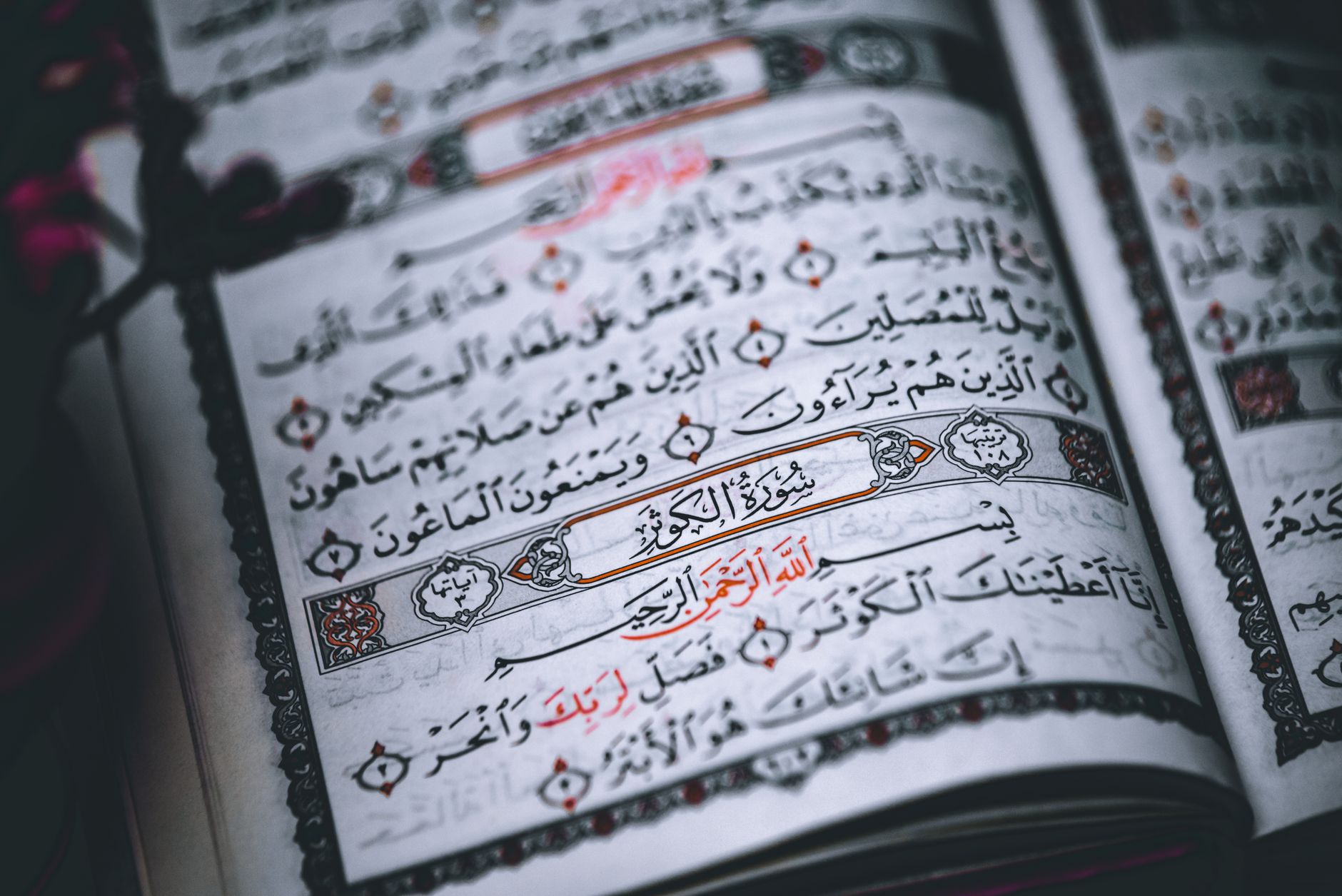
The sūrah begins: Bismillāh al-Raḥmān al-Raḥīm. In the name of God, the Most Compassionate, the Most Merciful. These are the names that bracket every chapter of the Quran and every significant act in Muslim life. They describe the primary character of God in their most absolute form: mercy and compassion, rather than power, judgement, or authority.
And then there are the other passages. Verses about those who disbelieve and their fate. Passages about fighting and killing. Descriptions of punishment in this world and the next. Material that, read without context, can seem to contradict the character described in Bismillāh. The tension is real, and the honest response is to engage it rather than pretend it is not there.
The question of context
The Quran was not delivered as a book. It was delivered in fragments over twenty-three years, in specific historical circumstances, to a specific community facing specific challenges. Many of the passages about warfare were delivered during active military conflict (when the early Muslim community was being attacked, killed, and forced from their homes). Many of the harsh passages about disbelievers were delivered in the context of active persecution, rather than in the context of peaceful coexistence with questioning neighbours.
Understanding a legal ruling requires understanding the situation it addressed. The harshest penal code in any system looks different when you understand the circumstances that produced it. This is the normal requirement of careful reading applied to any ancient text, rather than special pleading for Islam.
The Prophetic teaching on the priority of mercy
The Islamic theological tradition has always maintained a hierarchy of divine attributes in which mercy is primary. The Prophet ﷺ described God as saying:
The hadith is divine speech (ḥadīth qudsī) and it identifies the structural priority of mercy in God’s relationship to creation. The Quranic verse “My mercy encompasses all things” (kull shayʾ) is not limited to believers or to those who perform correctly. It encompasses all things. This is the theological frame within which the harsher passages are to be read. The harsh passages are not separable from the mercy that precedes them. They are themselves expressions of a moral order in which the seriousness of human action is taken with the same care as the unfailing mercy that surrounds it.
Mercy and judgement are not contradictory. A parent who genuinely loves their child may also impose consequences for serious harm (as the expression of the seriousness with which they take the child’s moral life rather than the expression of cruelty). A judge who genuinely values justice may pronounce sentences that are hard, because justice takes wrong seriously rather than because justice is cruel. The harshness of some Quranic passages reflects mercy’s respect for the gravity of what human beings do to each other, rather than a contradiction of mercy.
The permission to question
The reader who finds certain passages difficult is exercising exactly the moral seriousness that the Quran itself demands, rather than being faithless. The tradition of Quranic interpretation (tafsīr) has always included vigorous debate about difficult passages, and the scholars who engaged that debate most honestly were those who sat with the difficulty, brought the full resources of the tradition to bear on it, and produced readings that honoured both the apparent surface and the underlying moral intelligence, rather than those who resolved the difficulties by pretending they were not there.
The difficulty is the beginning of careful engagement, rather than its end.

What the Quran does with violence
The Quran’s treatment of warfare and violence is more disciplined than the popular polemical reading allows. The verses authorising defensive warfare are paired with strict ethical constraints: prohibitions on aggression, restrictions on whom may be fought, requirements of proportionality, instructions to accept peace when offered. The Quran says:
The verse is the foundational passage on the Quran’s framework for warfare. It authorises only defensive combat (fighting against those who fight you) and explicitly forbids transgression. The phrase “God does not love the transgressors” is not decorative. It establishes that even within the authorisation to fight, the moral limits remain. The fighting is licensed for a defined purpose, conducted with defined restraint, and judged by a God who is not indifferent to how it is conducted. The harsh passages on warfare are not licences for arbitrary violence. They are the legal architecture of a community defending itself, conducted within constraints that the same Quran enforces.
The framework
The Islamic understanding of God as the source of normativeness resolves what looks like contradiction. God is the ground of all moral value (mercy and justice simultaneously), rather than merely kind. A God who was only merciful and never severe would be morally incomplete, just as a judge who acquitted every defendant regardless of evidence would be negligent rather than merciful. Tawḥīd holds mercy and justice together in one will, one purpose, one moral order. The harsh passages are the same God addressing different realities with the full weight of His moral authority, rather than departures from the merciful God.
The issue becomes clearer once Islam is approached as a coherent moral and intellectual vision rather than a pile of disconnected rulings. Questions of belief, revelation, ethics, and human dignity illuminate one another, and many objections weaken when that wider picture is kept in view.
The resolution lies in tawḥīd itself. If God is one (the single source of mercy, justice, wisdom, and authority) then His revelation must address the full spectrum of human moral reality. A text that spoke only of comfort would be incomplete. A text that spoke only of punishment would be cruel. The Quran speaks of both because reality contains both, and the God of tawḥīd is the ground of all normativeness, the source of the moral order that makes both mercy and severity intelligible.
The passages that seem harsh become intelligible within the framework of tawḥīd. A God who is the source of all moral value (whose very existence is normative, whose every attribute functions as a command) does not speak arbitrarily. His severity serves the same moral order His mercy serves. The reader who encounters a difficult passage is encountering a God who takes human moral agency seriously enough to warn, rather than a God who delights in punishment.