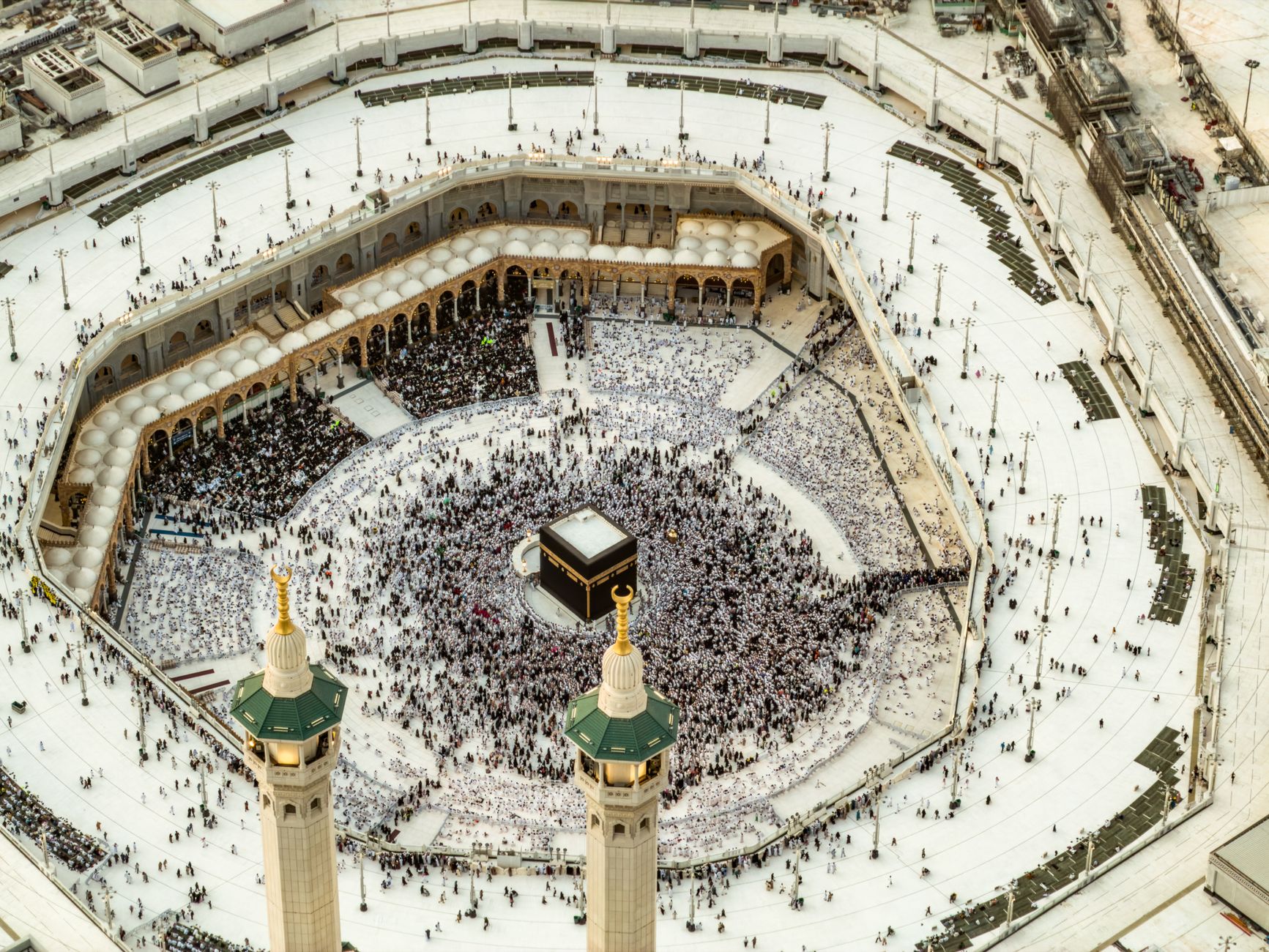
The charge has surface plausibility: Muslims orient toward a physical structure five times a day, circle it during pilgrimage, and kiss a stone embedded in its wall. If a stranger from outside described this behaviour without context, “idol worship” might seem like a reasonable description. The Islamic account explains exactly why the description fails, and the distinction is not arbitrary.
What worship actually requires
The defining feature of worship, in Islamic theology and in most serious philosophical accounts, is the directing of ultimate reverence, dependence, and submission toward an entity as an end in itself. Physical orientation is a separate matter. When a Muslim prays facing the Kaaba, they are directing their prayer to God. The Kaaba is a qiblah (direction). The qiblah is functional, not theological.
The analogy is imperfect but clarifying. A person praying in a cathedral does not worship the building. A soldier saluting a flag does not worship the cloth. A Jew facing Jerusalem does not worship the city. Physical orientation is one thing. Metaphysical submission is another. The Quran is explicit that God is not located in the Kaaba and is not contained by any physical structure.
The verse settles the matter at the level of doctrine. The direction of prayer is a unifying convention for the community. The God being worshipped is not contained by direction at all.
The Quranic origin of the Kaaba
The Islamic account places the Kaaba’s origin in the prophetic history of monotheism, traced back to the prophet Ibrāhīm (Abraham). The Quran recounts the building of the house with explicit instructions about its purpose:
The verse establishes the original purpose of the site as a place of monotheistic worship in which associating any partner with God is explicitly forbidden. The instruction to “purify” the house presupposes that contamination by polytheism is a real possibility, and the rest of Islamic salvation history records exactly that contamination occurring across centuries before the Prophet Muḥammad ﷺ arrived to clear it.
What the Black Stone is and is not
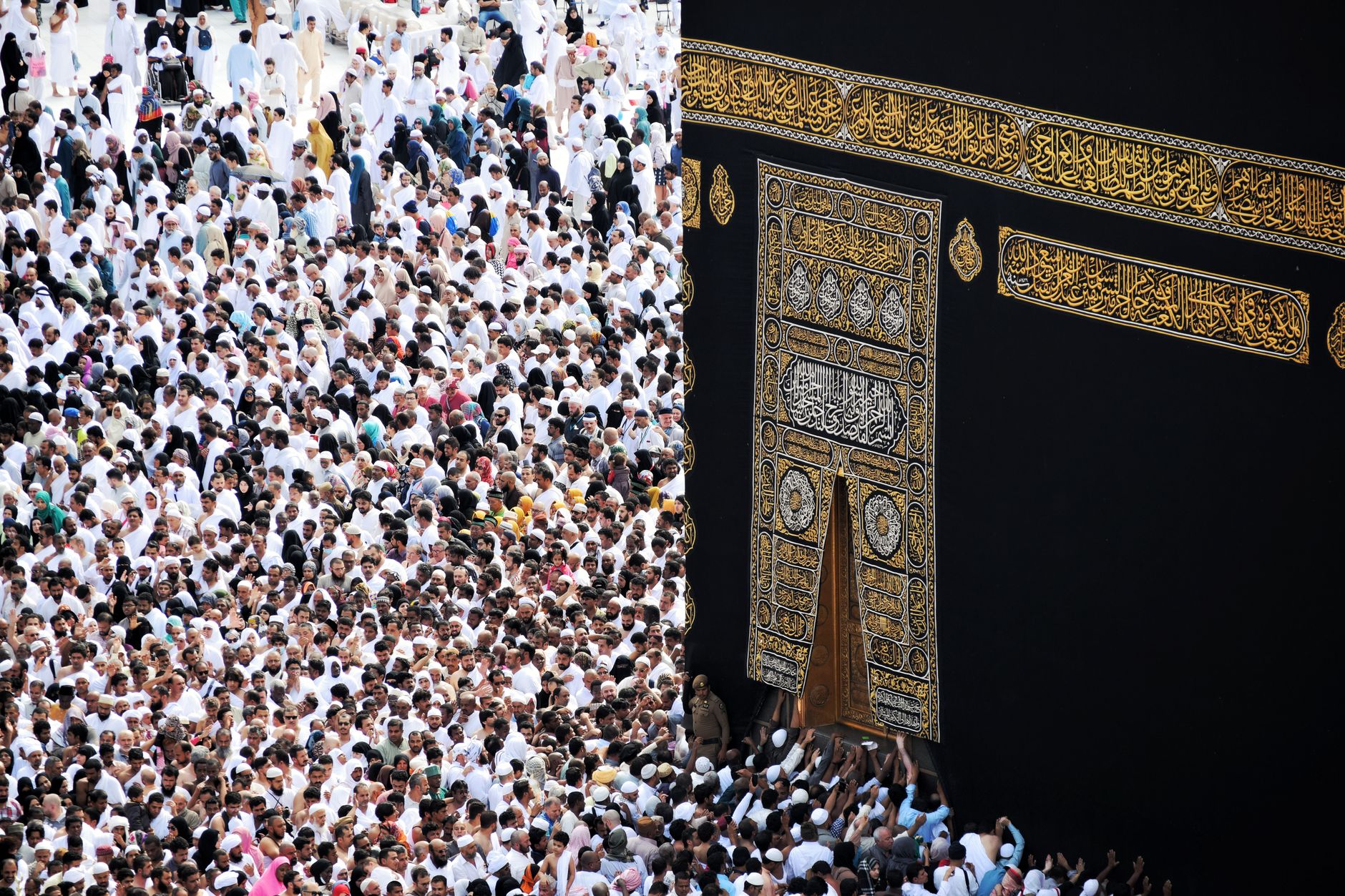
The Black Stone embedded in the corner of the Kaaba is kissed during pilgrimage as a ritual act. Critics frame this as functional idol worship. The Islamic sources address the question directly. ʿUmar ibn al-Khaṭṭāb, the second caliph, kissed the stone and made the position explicit:
The statement is the position of a person who knows the stone is materially inert and follows a practice precisely because the Prophet established it. The act has the form of a kiss; the meaning is the meaning the Prophet attached to it, which is a ritual gesture of allegiance to the Abrahamic monotheism the Kaaba represents. The distinction between performing a ritual act and directing worship is well understood in the tradition and was never ambiguous.
The pre-Islamic history of the Kaaba
The objection notes that the Kaaba predates Islam and was used by polytheists to house idols. The Quran acknowledges exactly this. The Islamic account holds that the Kaaba was originally built by Ibrāhīm as a house of worship for the one God, was subsequently corrupted by polytheism over many generations, and was restored by the Prophet ﷺ to its original monotheistic function. The pre-Islamic use of the site is what the Islamic account describes as a corruption that called for correction.
When the Prophet entered Mecca in 630 CE (8 AH), one of his first acts was to clear the Kaaba of the idols that had been placed inside it.
A site that had housed 360 idols was returned to the direction of prayer for a religion that defines itself by the absolute rejection of associating any partner with God. The act of restoration was unambiguous, and the verse the Prophet recited during it (Sūrat al-Isrāʾ 17:81) framed the whole event as the displacement of falsehood by truth. The pattern that follows from these reports is restoration, not continuity. The Kaaba under the Prophet’s authority was a different functional reality from the Kaaba under the polytheist custodians who preceded him.
The criterion that matters
The Islamic criterion for distinguishing monotheism from idolatry runs through whether ultimate reverence, fear, love, and dependence are directed toward God alone or shared with other entities. The criterion has nothing to do with whether physical objects are involved in religious practice. By the Islamic criterion, practice at the Kaaba is unambiguously monotheistic. The prayer said facing the Kaaba addresses God. The pilgrimage that includes circling it is a ritual whose every element is addressed to God. The Black Stone that is kissed is explicitly acknowledged to be materially inert.
Calling this idol worship requires either ignoring what the worshippers say they are doing or adopting a definition of idolatry so broad that it would also condemn every Christian who faces an altar, every Jew who faces Jerusalem, every Hindu who offers water to the sun, and every secular person who places a hand over the heart during a national anthem, on the grounds that physical orientation is involved in symbolic practice. The definition that catches all of these as idolatry is too broad to do useful work. The Islamic definition, which targets the inner direction of worship rather than the outward shape of practice, is the definition that actually picks out idolatry from other forms of religious life.
Why the question matters
Islam takes the prohibition of shirk (associating partners with God) more seriously than any other prohibition in its system. Shirk is described in the Quran as the one sin God will not forgive without explicit repentance, the foundational error against which all of revelation is sent. A religion structured around that prohibition is, by construction, hostile to idolatry in every form. The accusation that it nevertheless practices idolatry at its central sanctuary contradicts the most basic frame of the religion’s own theology. The accusation rests on a confusion between physical practice and metaphysical orientation. Once that confusion is named, the accusation dissolves.