If God is omniscient and understands Malay, English, Swahili, and Mandarin as readily as Arabic, why is the formal prayer of Islam locked to a specific language spoken natively by a minority of Muslims worldwide? A Javanese Muslim who has memorised the Arabic of the prayer without fully understanding it word by word: is that genuine communication with God? The objection is reasonable. The answer requires understanding what Islamic prayer is and what it is doing.
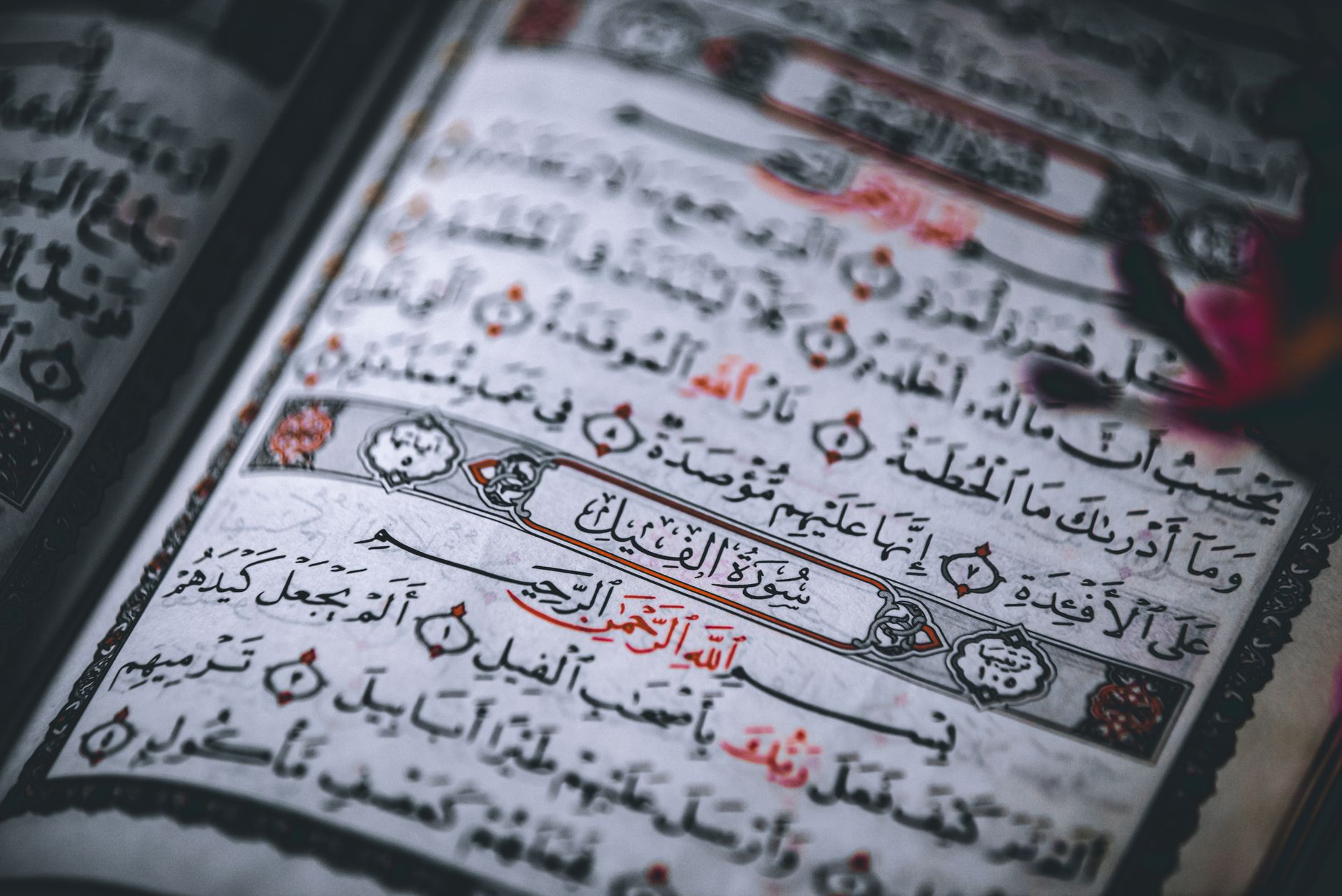
Two kinds of communication with God
Islamic practice distinguishes between ṣalāh (the formal, structured prayer performed five times a day) and duʿāʾ (personal supplication). The two are different acts and operate under different rules.
When a Muslim prays for their sick child, confesses a sin, asks for guidance, or simply speaks to God in their own heart, Arabic is not required. Duʿāʾ may be offered in any language, at any time, in any posture. God hears every language. The tradition has never held otherwise. The Quran itself describes God as nearer to the human being than the jugular vein, present to every inward whisper:
Ṣalāh is something different. It is a ritual act of worship, a participation in a shared form that connects every Muslim across geography, language, culture, and century into a single act of acknowledgment before God. The structure of ṣalāh is fixed: the same opening declaration, the same recitation of al-Fātiḥah, the same bowing and prostration, the same closing greeting of peace. The Arabic is part of that fixed form.
The Quran’s emphasis on the Arabic of revelation
The Quran refers to its own Arabic character repeatedly, in language that treats the choice of language as part of the revelation itself. The point is not that Arabic is a superior language but that the precise form of the words carries meaning the way the precise structure of a mathematical proof carries its conclusion.
The same emphasis recurs in Sūrat Fuṣṣilat 41:3, Sūrat al-Zukhruf 43:3, and elsewhere. The Arabic is not a contingent vehicle the message could shed without loss. The form and the content are bound together in a way translation can carry across only partially.
Preservation and precision
Every translation of the Quran is an interpretation. Translators must choose between competing senses of every important word. Taqwā can be rendered as piety, fear, awareness, or restraint, depending on context, and the translator’s choice closes options the original keeps open. If the formal prayer were conducted in any language, the Quranic recitation within it would be replaced by interpretive renderings that vary across translators, cultures, and centuries.
The Arabic requirement preserves the prayer in its revealed form. A Muslim praying in Jakarta and a Muslim praying in Lagos recite the same words in the same form, words whose meaning and structure have not been filtered through a translator’s decisions. The formal worship of the global Muslim community is a single act, conducted in a single liturgical language, transmitted directly from the seventh century to the present without textual mutation. Few religious traditions have achieved that kind of preservation.
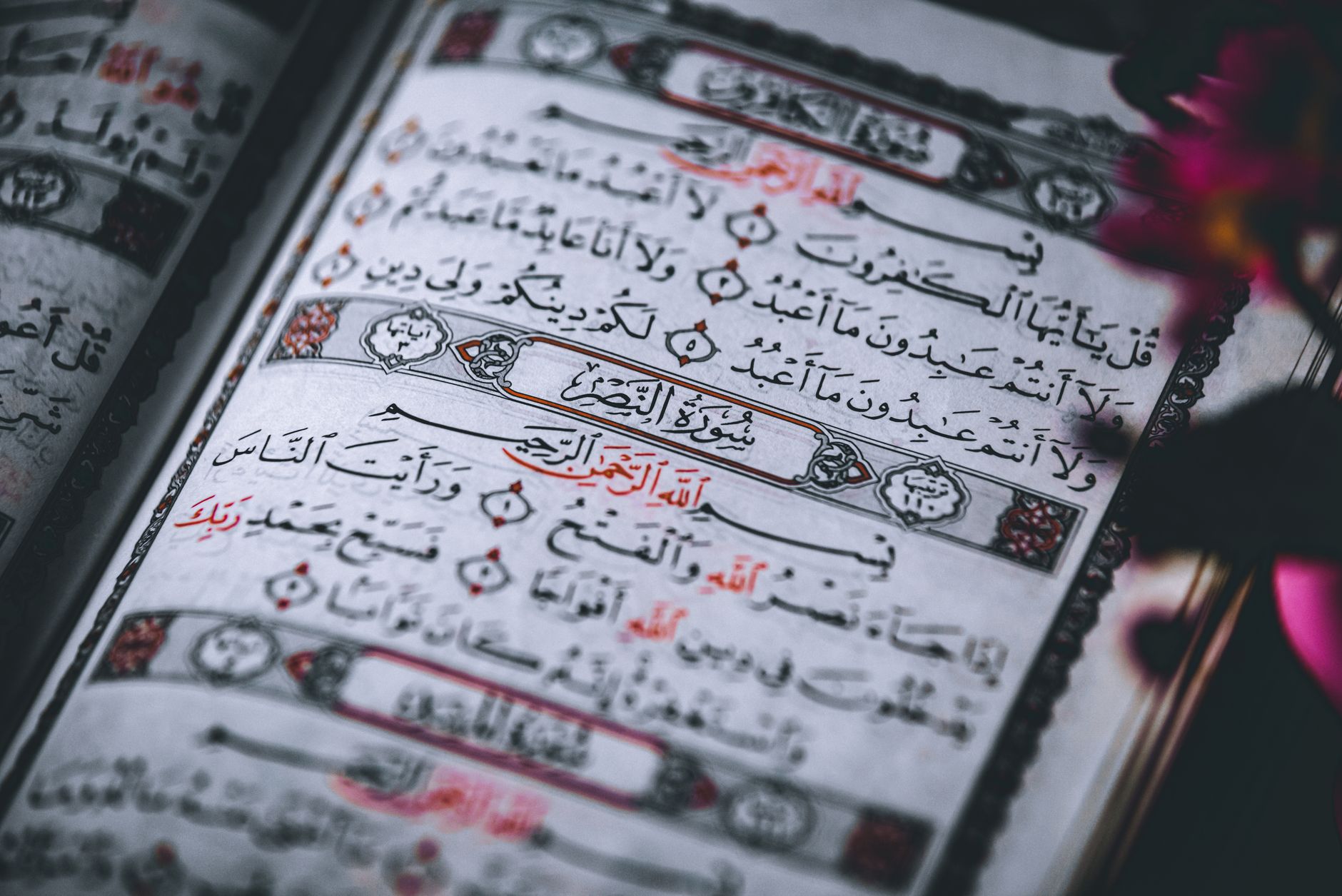
The community dimension
Arabic in ṣalāh creates a form of unity that no other mechanism could replicate. Muslims from every nation, linguistic background, and cultural tradition share a common liturgical language. A Muslim who travels from Kuala Lumpur to Istanbul to Cairo can join any congregation’s prayer and know exactly where they are in it, at exactly which point of recitation, at exactly which posture. The Arabic of the prayer is the most universally shared practice in the Muslim world.
The phrase “bow with those who bow” carries the communal dimension into the verse itself. The prayer is communal in its very structure, a shared form that constitutes the community in its act of worship.
Arabic in ṣalāh has nothing to do with Arab ethnic prestige. The hadith makes this point directly. The language serves the unity of the worshippers and the integrity of the revelation, with no claim about the spiritual standing of any people who happen to speak it natively. Bilāl ibn Rabāḥ, the Abyssinian companion who became the first muezzin of Islam, called the adhan in Arabic with a heavy non-Arab accent. The Prophet defended his pronunciation against those who criticised it, and the practice was preserved.

The “minority of native speakers” objection
The observation that most Muslims today are not native Arabic speakers is correct, and it has been correct for most of Islamic history. By the second Islamic century, the majority of Muslims were Persians, Berbers, Egyptians, Indians, and Central Asians, none of whom spoke Arabic as a mother tongue. The Arabic-only requirement of ṣalāh has therefore always meant that most Muslims learn the prayer text as a memorised, reflected-upon, gradually-internalised body of language that grows in meaning across a lifetime.
That process of progressive understanding is part of the practice. A Muslim child first learns to recite the Fātiḥah by sound. As they mature, they learn its meaning. As they study, they learn the layered senses of each word, the grammatical structure that links the verses, the way the surah summarises the entire Quran in seven verses. The text is not absorbed once and set aside. It deepens with each return.
What the worshipper brings
The obligation to learn the meaning of what one recites runs alongside the Arabic requirement. A Muslim who prays in Arabic without understanding has fulfilled the formal requirement. The tradition strongly encourages going further: understanding the words, reflecting on them, letting them land. Generations of Muslims have memorised the Quran in Arabic as children and spent their adult lives coming to understand its depths. That pairing of formal precision with living engagement is the tradition at its best.
The personal dimension, the specific grief or gratitude brought to the moment, the inward address to God that accompanies the shared form, is fully present alongside the Arabic. God, who hears the unexpressed intention of the heart, understands what the worshipper means even when their tongue is reciting words they only partially grasp. What the Arabic secures is the integrity of the form across the whole community. What the worshipper brings is everything else.
Beyond the prayer itself, the language barrier collapses entirely. Every Muslim is encouraged to make duʿāʾ in their own language, to study the Quran in translation alongside the Arabic, to read the hadith in their mother tongue, and to engage Islamic scholarship in whichever language serves comprehension best. Arabic is the language of one specific act, ṣalāh, and one specific text, the Quran. The wider religious life of the Muslim is conducted in whatever language they live in.