The critique has some truth in it. In many Muslim-majority contexts, Ramadan has become a month of shifted consumption: heavy pre-dawn meals, restaurant culture after sunset, daytime sleep, and social celebration that in aggregate may involve more food than ordinary months. If the point of Ramadan is caloric reduction, the practice often fails its own goals. The point is something else.

What the tradition says fasting is doing
The stated purpose is taqwā, translated variously as God-consciousness, piety, awareness, or restraint. Weight loss does not appear in the verse. Health optimisation does not appear. The voluntary withholding of food and water during daylight hours is a practice of restraint that is supposed to extend inward: a person who can discipline the appetite for food and drink is practising the faculty of restraint that makes ethical life possible.
The Prophet’s own commentary on the practice draws the same line:
The hadith is the tradition’s own self-correction of the reduced version of fasting. A person who abstains from food while lying, gossiping, or treating others badly has not fasted in any meaningful sense. The external practice is the scaffold for an internal reorientation. The body’s hunger is supposed to remind the worshipper of the soul’s need for the same kind of discipline.
The four spiritual functions of fasting
Classical scholars identified several distinct functions the practice is structured to serve. Taqwā (God-consciousness) is the framing purpose stated in the Quran. Beyond it the tradition recognises ṣabr (patience), the daily training in delaying gratification across a sustained period; shukr (gratitude), the awareness of food and water as gifts rather than entitlements, produced by the experience of going without and then receiving; and muwāsāh (empathy), the experiential basis for understanding what hunger feels like for those who have no choice about it.
Each function has a specific mechanism. Ṣabr is built by the simple discipline of refusing accessible food and water when permitted to take them, repeated 30 times across the month. Shukr is provoked by the sensation of relief at the moment of breaking the fast, an experience that is supposed to deepen ordinary gratitude for ordinary meals. Muwāsāh ties the fast to the obligation of zakāt al-fiṭr, a mandatory charitable payment at the end of the month that translates the experiential awareness of hunger into material help for those who go hungry without choice.
The Night of Power
The spiritual centre of Ramadan is one specific night within the last ten days, called Laylat al-Qadr (the Night of Power or Decree).
The night marks the beginning of the Quranic revelation to the Prophet and is described as a single night whose worth exceeds the ordinary spiritual yield of more than 83 years. The exact date within the last ten odd nights is left unspecified, on the principle that the seeker should pursue the entire period rather than time their effort to a single calendar day. The practice of iʿtikāf, spending the last ten days of Ramadan in seclusion in the mosque devoted to worship and Quran recitation, is structured around this search.

The exemption structure
The objection that fasting can be harmful is acknowledged within the practice itself. The Quran provides explicit exemptions:
The exemptions extend to the sick, travellers, the pregnant, the nursing, the menstruating, the elderly, and anyone for whom fasting would cause genuine harm. A diabetic on insulin, a pregnant woman with hyperemesis, a labourer in extreme heat, or a person undergoing chemotherapy is not required to fast. The tradition has never mandated self-harm in the name of religious practice, and the exemption structure is so well established that contemporary Islamic medical councils issue formal guidance for specific medical conditions.
Research on intermittent fasting, which Ramadan structurally resembles, shows metabolic effects that range from neutral to beneficial when the practice is healthy and appropriately calibrated. A religion that explicitly provides exit clauses for hardship cannot coherently be accused of requiring people to harm themselves.
The communal dimension
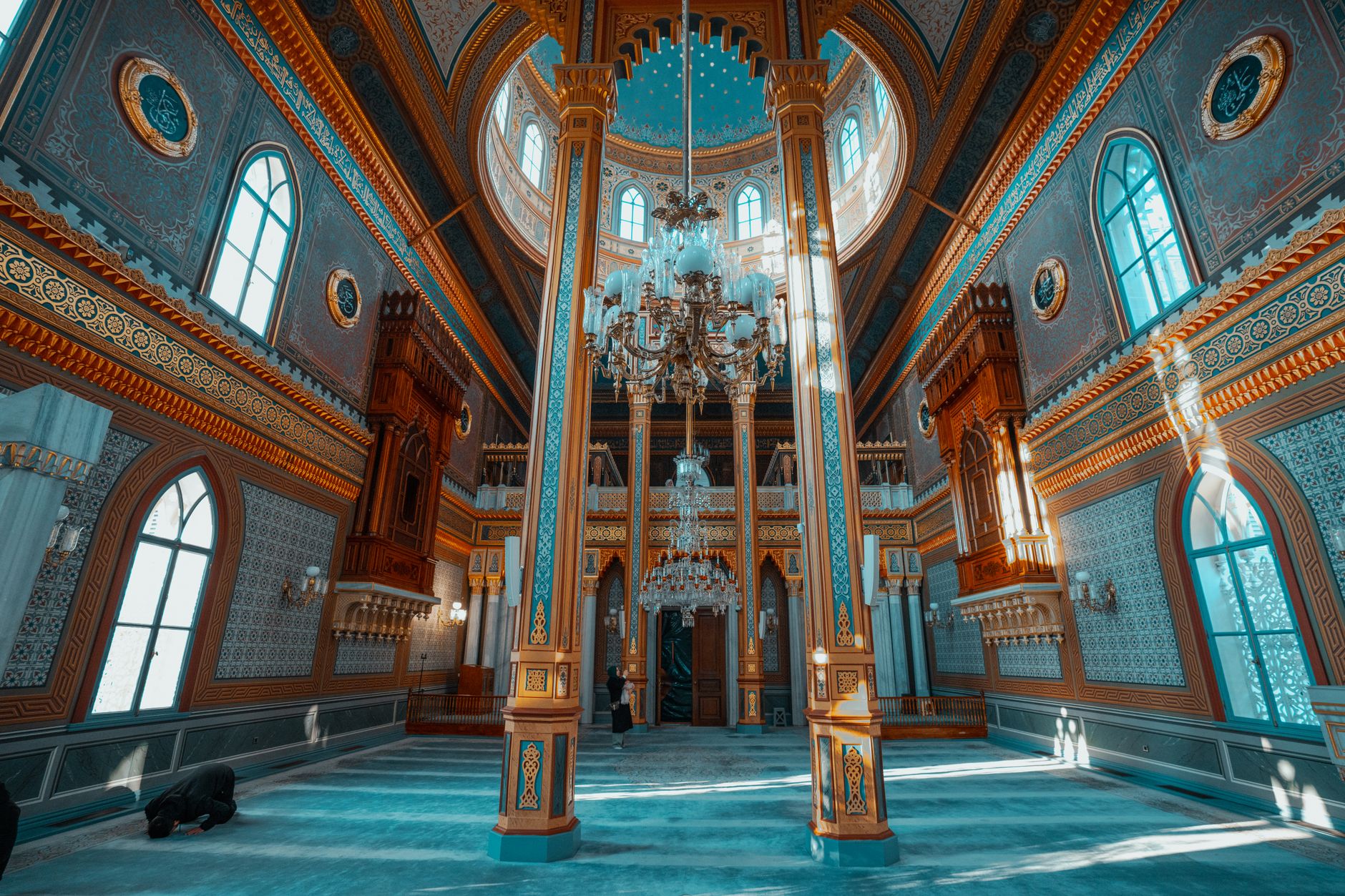
Ramadan is not a private practice. The fast is broken at exactly the same moment across an entire time zone, with the call to prayer marking sunset. Mosques fill in the evenings for tarāwīḥ, special Ramadan night prayers in which the entire Quran is recited across the month. Charitable giving spikes; the homeless and travellers receive iftar meals from communities that organise large public dinners; the rich and the poor sit at the same long tables. The month creates a shared rhythm at the scale of an entire civilisation.
That communal rhythm has effects the individual-fasting frame misses. The discipline of going without is borne collectively rather than as a private struggle, the breaking of fast is a collective release, and the accumulation of charitable acts produces effects on the social fabric that show up in measurable ways: reductions in beggary, increases in food distribution, the visible attention of wealthier families to the needs of poorer ones. The fact that some Muslims experience Ramadan primarily as inconvenience or social performance does not erase the structure the practice is supposed to produce.
What a criticism of Ramadan practice should target
The legitimate criticism of how Ramadan is often practised, the commercialisation, the reversed sleep schedules, the social pressure to perform piety rather than practise it, is a criticism the tradition itself makes from the inside. The Prophet explicitly warned against a fast that is only hunger and thirst with no spiritual substance. The criticism, properly directed, lands on the gap between what Ramadan is supposed to form and what it often produces in practice. The gap is real. The remedy is to return the practice to its purpose, which is the formation of taqwā, the steady awareness of God across the ordinary acts of a day.