Sūrat al-Kahf tells of Dhul-Qarnayn, “the one with two horns,” a righteous ruler who travels to the setting of the sun and then to its rising. At the western limit, the verse says, he found the sun setting in a spring of dark mud. Critics present the verse as a scientific error, since the sun sets in no spring, and as a borrowing from a Syriac legend about Alexander the Great. Both charges depend on how the verse is read, and the verse itself, together with fourteen centuries of commentary on it, settles more than the critics allow.

The verse
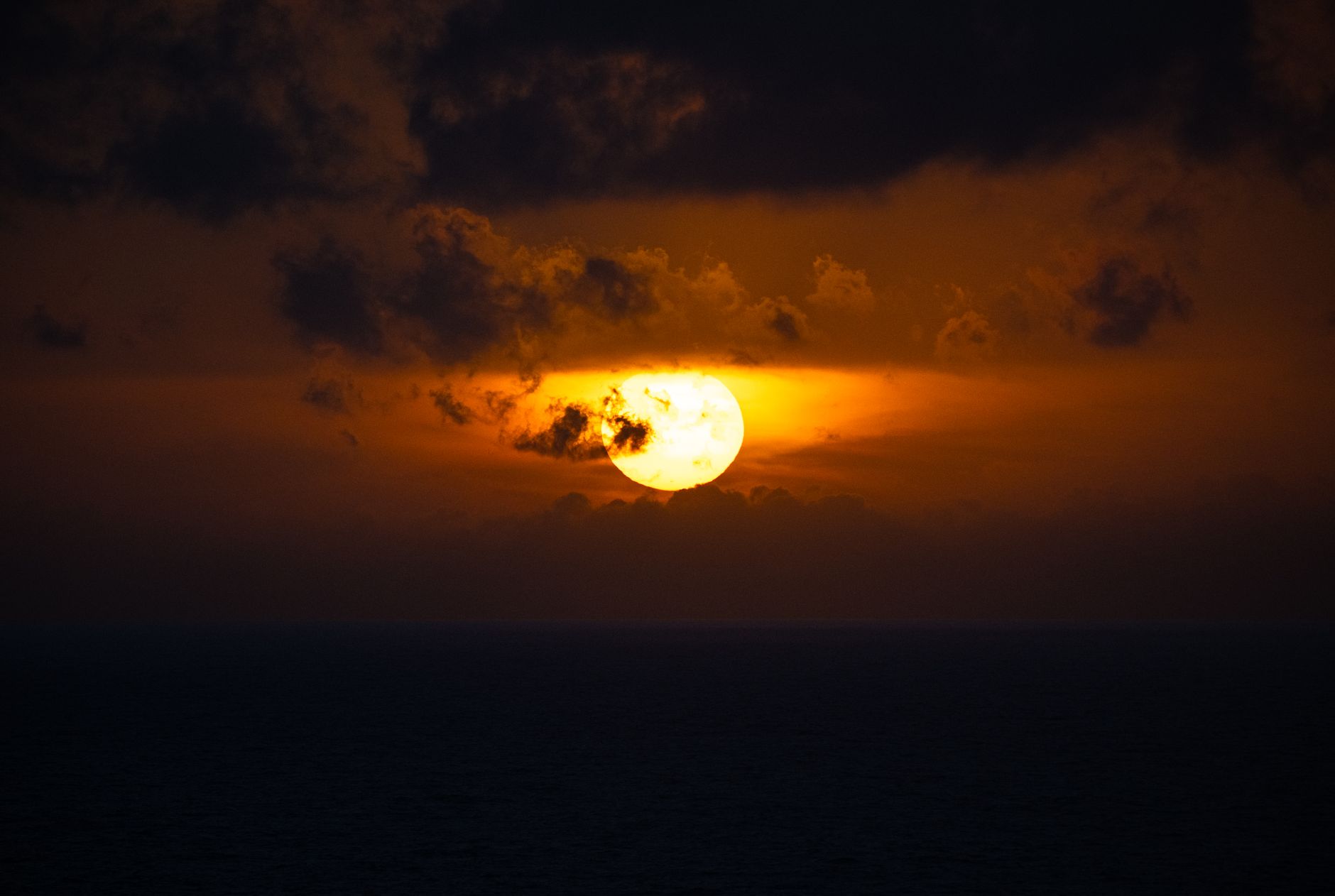
The key word is wajadahā: “he found it.” The verse reports what Dhul-Qarnayn found when he reached the western limit of his journey, which is what he saw. A traveller standing on a western shore finds the sun setting in the sea; a traveller by a dark marsh or lake at sunset finds it setting into the water. The Quran describes the sight from his position, in the same way that English speakers still say that the sun rises and sets.
What the classical commentators said
The perspective reading was not invented to answer modern critics. Ibn Kathīr, writing in the fourteenth century, explained the phrase as meaning that Dhul-Qarnayn saw the sun as if it were setting in the ocean, adding that anyone who goes to the coast sees the same thing, while the sun never leaves the course fixed for it.
Al-Jalālayn, the most widely read short commentary, says that the setting in a spring is described as it appears to the eye, because the sun is in fact far larger than the earth. Muslim astronomers of the classical period, many of them devout, measured the circumference of the earth and the motions of the sun with considerable accuracy, and none of them read this verse as a description of the sun’s physical resting place.
The Quran elsewhere describes the sun and the moon each moving in an orbit (21:33, 36:40), which a literal reading of 18:86 would contradict. A reader who takes one verse in isolation and ignores those statements has chosen the least coherent reading available.
The narrator objection
Critics reply that the narrator of the verse is God, who sees the sun as it is, so the verse cannot be a mere description of appearance. The objection misreads the grammar. God, the narrator, reports what Dhul-Qarnayn found. “He found it setting” is a statement about the traveller’s experience, made accurately by the narrator. If a historian writes that Columbus found the sea calm on a given morning, the historian is describing what Columbus saw, and no one supposes that the historian believes the sea is always calm.
The verse continues in the same way. It says that at the rising of the sun Dhul-Qarnayn found a people for whom God had made no shelter from it (18:90). The sun did not rise on that people alone; it rose on them as he found them. Both verses describe the limits of a journey from the traveller’s point of view.
The reading ḥāmiyah
The word translated “muddy,” ḥamiʾah, has a well-known alternative among the canonical readings: ḥāmiyah, meaning hot or warm. The two readings agree in consonants and differ in vowels and in the hamzah. Commentators noted both and explained each in turn: a dark, muddy spring, or a hot spring, or both at once. The variant shows that the earliest Muslim readers were already discussing the phrase, and none of them drew the conclusion the critics draw.
The Alexander legend
The second charge is that the Quranic story depends on the Syriac “Alexander Legend,” a Christian text in which Alexander travels to the ends of the earth, sees the sun enter a foul sea, and builds a gate against Gog and Magog. The parallels are real: the two journeys, the barrier and the peoples beyond it. Scholars who study the Syriac text have argued that it was composed in the early seventh century, around the time of the Byzantine emperor Heraclius’s war with Persia, which would make it nearly contemporary with the Quranic passage.
Two observations follow. First, a near-contemporary text cannot easily be the source of the Quranic account if the story was already known to the Prophet’s audience, as the opening verse implies: “they ask you about Dhul-Qarnayn.” The Quran answers a question about a figure its hearers already knew of. Second, where the two accounts overlap, the Quran’s version differs in its emphasis.
The Syriac Alexander is a conqueror whose exploits serve imperial propaganda; the Quranic Dhul-Qarnayn is a just ruler who attributes his power to God, refuses payment for his barrier, and warns that it will crumble when God decrees. The Quran retells a story that circulated in its world and gives it a moral centre: power held in trust from God.
Retelling a known story with a corrected meaning is what the Quran says it does with earlier narratives. Whether one finds that persuasive depends on prior commitments about revelation. It is a different claim from the charge that the Quran copied an error, because the supposed error, the sun entering a body of water, appears in the Quran only as what a traveller saw.

Who was Dhul-Qarnayn?
Muslim scholars have never agreed on his identity. Some early writers identified him with Alexander; many later scholars rejected that identification, since Alexander was a polytheist and the Quran presents Dhul-Qarnayn as a monotheist. Some modern Muslim writers identify him with Cyrus the Great of Persia, who is praised in the Hebrew Bible and associated in Daniel with a two-horned ram. The Quran leaves the name unstated, and its purpose in the passage does not depend on settling it.
A fair conclusion
Read with its grammar, its commentators and the rest of the Quran in view, 18:86 describes the setting sun as a traveller saw it at the western limit of his journey. The reading is old, it is grammatical, and it is consistent with the Quran’s other statements about the sun. The Alexander parallels raise a legitimate question about how the Quran relates to the stories of its time, and that question deserves discussion. The charge that the verse teaches the sun sets in a muddy pool is the weakest part of the critic’s case.