The Quran names a man called Haman as an official in the court of the Pharaoh who opposed Moses. The Hebrew Bible knows a Haman too, but he appears in the Book of Esther as a minister of the Persian king, roughly a thousand years after Moses. Critics conclude that the Quran confused two stories and moved a Persian villain into Egypt. The charge of anachronism is serious and deserves a careful hearing, which means examining what it assumes as well as what it asserts.

What the Quran says about Haman
Haman appears six times in the Quran, always alongside Pharaoh. He is named with Pharaoh and their armies as those who feared the Israelites, as a builder whom Pharaoh orders to raise a tower, and among the arrogant who were destroyed.
The fullest passage is the tower episode. Pharaoh mocks the idea of a God above and orders Haman to build something high enough to look at the God of Moses.
Three features stand out. Haman is a court official with authority over construction. He fires clay to make bricks. He is linked to Pharaoh and to Qarun (Korah), and the Quran treats all three as figures of the Egyptian period. Nothing in these verses resembles the Haman of Esther, who is a Persian vizier at Susa, plots the destruction of the Jews, and dies on the gallows he prepared for Mordecai.
The argument from borrowing
The critic’s case runs in three steps. The only Haman known to ancient literature is the one in Esther. The Quran mentions a Haman. Therefore the Quran took the name from Esther and placed it in the wrong century. The conclusion depends on the first premise, and the first premise is an argument from silence.
The Book of Exodus does not name a single official at Pharaoh’s court. It does not even name the Pharaoh. Its narrative concerns Moses, Aaron and the king, and the officials around the king remain anonymous. Egyptian royal administration employed overseers of works, chief builders and quarry masters by the hundred, and the names of most of them are lost. To argue that the Quran cannot name an Egyptian official because the Bible does not name him is to treat the Bible as a complete register of Egyptian personnel, which it never claims to be.
The borrowing argument also has to explain why the borrowing left no trace of its source. If a seventh-century author wished to decorate the Moses story with a famous villain from Esther, the obvious features to carry over would be the ones that made Haman famous: the plot against the Jews, Mordecai, Esther herself, the king of Persia, the feast of Purim. The Quran carries over none of them. What remains is a name and nothing else, attached to a role (overseer of building in brick) that has no parallel in Esther at all.
The Egyptian name question
Some Muslim writers have gone further and claimed that Egyptology has confirmed a Haman in the records of the New Kingdom. The most widely circulated version comes from the French physician Maurice Bucaille, who reported that an entry in Hermann Ranke’s dictionary of Egyptian personal names matched the Quranic Haman and gave his profession as chief of the workers in the stone quarries.
That claim should be handled with caution, and this site does not rely on it. Critics who checked Ranke’s entry point out that the name is incompletely read, that the title belongs to a different source, and that the person in question served the temple of Amun at a date that does not fit the Exodus on standard chronologies. Whatever one concludes about that particular inscription, an apologetic built on a disputed reading of a single entry is weaker than the simpler point it was meant to support. The defence of the Quran here does not need Bucaille.
The simpler point is this. Names recur. The Hebrew Bible itself has several men named Nathan, Zechariah and Joseph in different centuries and places, and nobody accuses the biblical authors of anachronism for it. A Persian official named Haman and an Egyptian official with a name rendered in Arabic as Haman can both exist without either depending on the other. The critic must show that the Quranic Haman is the Esther Haman, and the only evidence offered is the shared name.
The tower and the bricks
Critics add a second charge: the tower episode borrows from the Tower of Babel in Genesis 11, which was built in Mesopotamia. The Quran, they say, has merged Babel, Esther and Exodus into one confused scene.
Read on its own terms, the Quranic scene is a piece of royal mockery. Pharaoh, who claims to know no god but himself, orders a high structure so that he can look for the God of Moses, adding that he thinks Moses a liar. The point is his arrogance, and the Quran says so directly: his evil deed was made attractive to him.
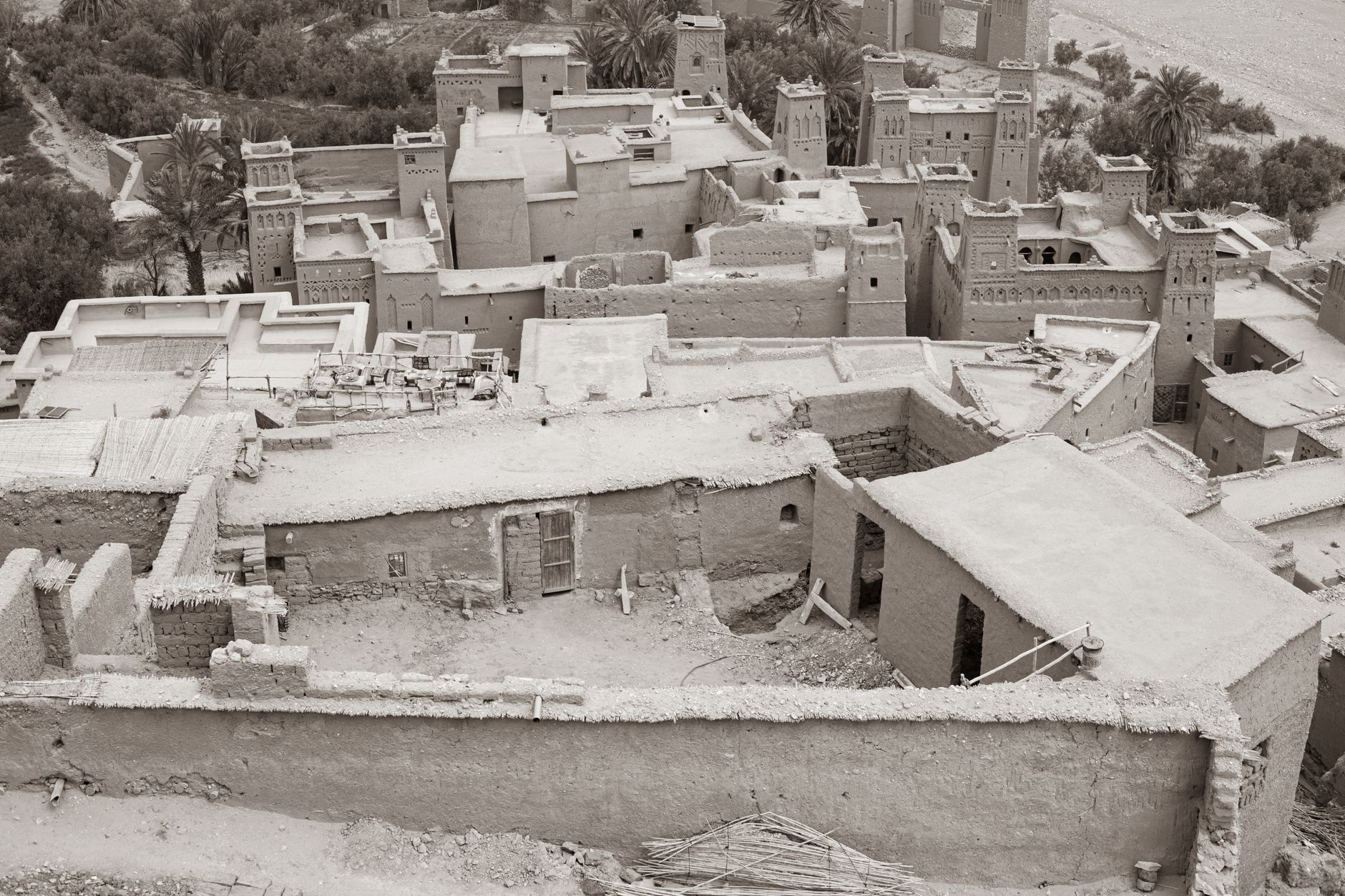
The building material is fired clay brick, which matches Egyptian practice; mud brick, fired or sun-dried, was the ordinary material of Egyptian construction outside the great stone monuments, and Exodus itself describes the Israelites making bricks for Pharaoh. A king ordering his master of works to build high is no more a borrowing from Babel than any other story about a tall building.
What an honest conclusion looks like
The anachronism charge would succeed if three things were true: that the Bible preserves the names of all of Pharaoh’s officials, that only one Haman could ever have existed in the ancient Near East, and that the Quran’s Haman shares the identifying features of the Haman in Esther. None of the three holds. The Bible names none of the officials, names recur across cultures, and the Quranic Haman shares nothing with the Persian Haman beyond the name.
What remains is a figure who is otherwise unattested in surviving records. That is a real limitation, and it is the same limitation that applies to most named individuals in ancient religious narratives, including many in the Bible. Absence from the surviving record is a reason for humility on both sides. It falls well short of proof that the Quran made a mistake, and the specific theory of borrowing from Esther fits the evidence poorly.
The reader who wants to test the Quran’s historical claims will find stronger ground elsewhere: in how the text was preserved, in its account of earlier scripture, and in the specific historical details it gives about the Prophet’s own time. On Haman, the honest verdict is that the critic has not carried the burden of proof.