Much of the online discussion about Islamic eschatology focuses on hell, as though punishment were the whole story. It is not. Islam presents a comprehensive account of what happens after death: the transition of the soul, the intermediate state, the resurrection, the reckoning, and the final disposition. The picture is detailed, internally coherent, and grounded in the same principles (tawḥīd, justice, mercy, accountability) that govern everything else in the Islamic framework.
Death and the barzakh
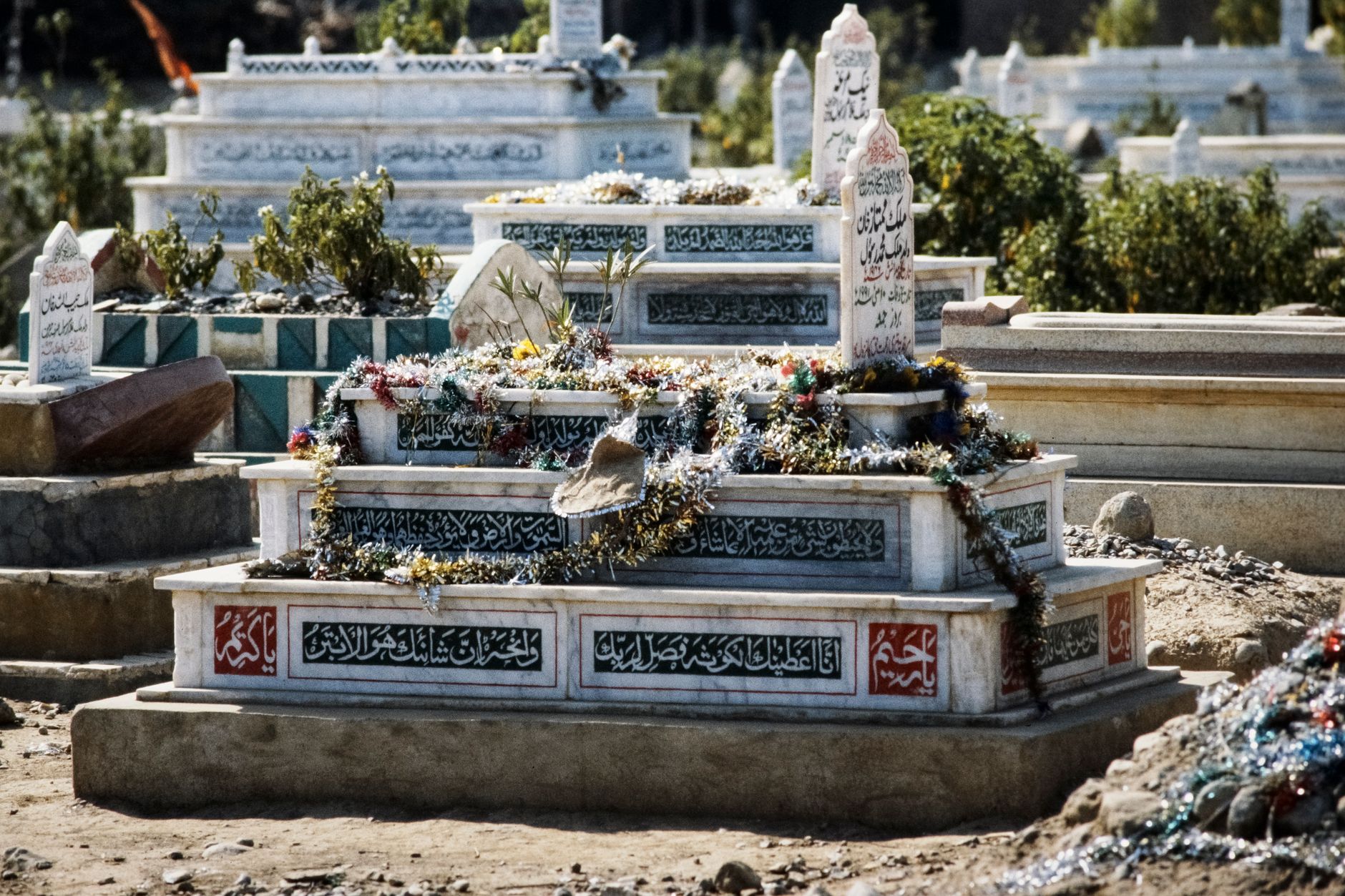
In Islam, death is a transition rather than annihilation. The soul leaves the body and enters the barzakh, the intermediate domain between death and resurrection. The barzakh is a conscious state in which the soul experiences a foretaste of what awaits: comfort for those who lived well, distress for those who did not. The Prophet ﷺ described the grave directly:
The hadith establishes that the period between death and resurrection is not unconscious storage. The state is governed by what the soul carried into it, with the same justice and mercy that govern the final reckoning. The picture follows from the Islamic principle that the khalīfah’s choices have consequences not only in this life but beyond it. If moral agency is real, its effects do not stop at the moment of biological death. The barzakh is the continuation of the moral story, not its interruption.
The Day of Judgement
The Quran describes the Day of Judgement in vivid, urgent terms. Every human being who ever lived will be resurrected and brought before God. Their deeds will be laid out (every action, every intention, every moment of kindness and every moment of cruelty) and weighed on a scale of perfect justice. No advocate, no intercessor, no institutional authority can alter the reckoning. The khalīfah stands before his Creator alone, accountable for what he did with the trust he was given.
The verse is the ultimate expression of actionalism: every deed counts, every intention matters, no one escapes the accounting. The accounting is conducted by a God who is both just and merciful, and whose mercy, the Quran says, encompasses all things.
Mercy and intercession
The Islamic eschatological picture is not all severity. The Quran and the hadith tradition describe God’s mercy in terms that should give pause to anyone who thinks Islam is simply about punishment. God forgives all sins except shirk for whom He wills. His mercy outstrips His wrath. The Prophet will be granted intercession (the ability to plead on behalf of his community). God Himself, in hadith after hadith, is described as more merciful than a mother to her child:
The hadith was spoken by the Prophet ﷺ at the moment of seeing a captive woman searching frantically for her child among prisoners and finally embracing the child with overwhelming relief. The image was deliberate. The Prophet did not invoke an abstract concept of mercy. He invoked the most intense form of mercy available in human experience and identified God’s mercy as exceeding it.
The balance between justice and mercy is the coherent expression of a God who takes moral agency seriously enough to hold people accountable, and who is generous enough to forgive those who turn back, repent, and seek His face. The khalīfah who lived well has nothing to fear. The khalīfah who failed but repented has hope. The khalīfah who defied everything and repented at the last moment still has a door open, because the God of tawḥīd is waiting to forgive rather than waiting to punish.
Paradise
The Quran describes paradise in sensory terms (gardens, rivers, shade, companionship, beauty) and also in terms that transcend the sensory: the pleasure of God. The highest reward is riḍwān Allāh (God’s satisfaction) rather than the physical comforts, though these are real. The khalīfah who fulfilled his vocation, who bore the trust faithfully, who struggled through doubt and difficulty and moral failure and kept returning, that khalīfah’s ultimate reward is the knowledge that the God who created him is pleased with what he became, rather than a garden alone.
The “desert man’s fantasy” objection
A recurring critique of the Quranic description of paradise points to its imagery (gardens, flowing water, shade, fruit, companionship) and observes that these are precisely the things a seventh-century Arabian would have valued as the height of pleasure. The conclusion is then announced: the description bears the fingerprint of its cultural origin, and that origin is human rather than divine.
The argument commits the genetic fallacy. Where a description comes from culturally tells us about its mode of communication. The cultural origin does not, by itself, settle whether the description is true. The pleasures of paradise, in the Islamic account, are conveyed through imagery that is comprehensible to the original audience. That is what effective communication requires.
A revelation issued to a population that had never seen ice and never experienced famine would have to translate the experience of paradise into language that audience could parse. Gardens and rivers were the standard metaphors of plenty in that part of the world, and the Quran uses them. The Quran also states explicitly that the actual reality of paradise is beyond human imagination. The sensory imagery functions as descriptive analogy and does not exhaust the reality it points to.
The hadith makes the point directly. The descriptions in the Quran function as aids to understanding while leaving the underlying reality beyond complete description. They communicate the reality of reward through familiar imagery while maintaining that the reality itself transcends the imagery.
The wine question
A specific version of the same critique focuses on wine. The Quran prohibits wine in this life and describes wine as one of the pleasures of paradise. Critics ask how these can both be true without contradiction. The objection takes the form: if wine is good enough to reward in the afterlife, why is it forbidden in this one?
The answer turns on Islamic legal reasoning, specifically the concept of ʿilla (the legal cause or rationale of a ruling). The prohibition of wine in this life has a stated rationale: the loss of cognitive function it produces, the social harms that follow, the way it impairs the worshipper’s ability to fulfil obligations. The wine of paradise, as described in the Quran, has none of these effects:
The wine of paradise shares the name of the wine of this world but lacks the harmful properties that ground the prohibition. The ʿilla, the cause of the ruling, does not apply, because the substance does not produce the effects that grounded the prohibition in the first place. Islamic jurisprudence uses this reasoning consistently: a ruling applies where its cause obtains and lifts where its cause does not obtain. The two statements about wine are therefore consistent with each other and with the underlying jurisprudential framework.
The objection identifies a surface contradiction and treats it as evidence of internal incoherence. Reading the texts within their own legal logic dissolves the contradiction. The naming convention is shared; the underlying substance and its effects differ.
Why this matters for the seeker
The Islamic eschatology is designed to complete the moral picture that tawḥīd begins, rather than to frighten people into submission. If God is real, if moral agency is real, if the khalīfah’s choices genuinely matter, then those choices must have consequences beyond the seventy-odd years of biological life. A universe where moral agency is real but death erases everything is a universe where moral agency is ultimately meaningless. Islam says it is meaningful. It says the story continues, and that the continuation is governed by the same justice and mercy that govern everything else.
The person who fears what comes after death should know that Islam describes a God eager to forgive, who is honest enough to say that choices matter, and serious enough to mean it.
The completion of the moral architecture
The Islamic eschatology is the completion of the theology rather than a threat appended to it. If tawḥīd is true (if God is one, just, and merciful) then a final accounting is the necessary consequence of a universe where moral choices genuinely matter, rather than optional. The person who lived justly and the person who lived unjustly cannot have the same destination without rendering justice meaningless. The afterlife is where justice reaches completion, and where the mercy that pervaded this life extends into the next, vast enough to encompass every sincere act of repentance the khalīfah ever made.
The Islamic afterlife is the moral architecture of reality completing itself, rather than an afterthought. This life is the testing ground, the arena where the khalīfah makes choices in freedom. The afterlife is where those choices reach their full consequence. The two are stages in a single coherent story: creation, trust, freedom, choice, accountability, and resolution. The God who authored the story is present at every stage, and the final chapter, for those who sought Him honestly, is reunion rather than punishment.