Every year, thousands of people in the West convert to Islam. They are not born into it. They are not pressured by family. They are not culturally predisposed toward it. Many come from atheist, agnostic, or Christian backgrounds. Some are academics, scientists, artists, or professionals. They investigated Islam on their own terms and concluded it was true. What are they finding that their critics are missing?
The coherence of tawḥīd
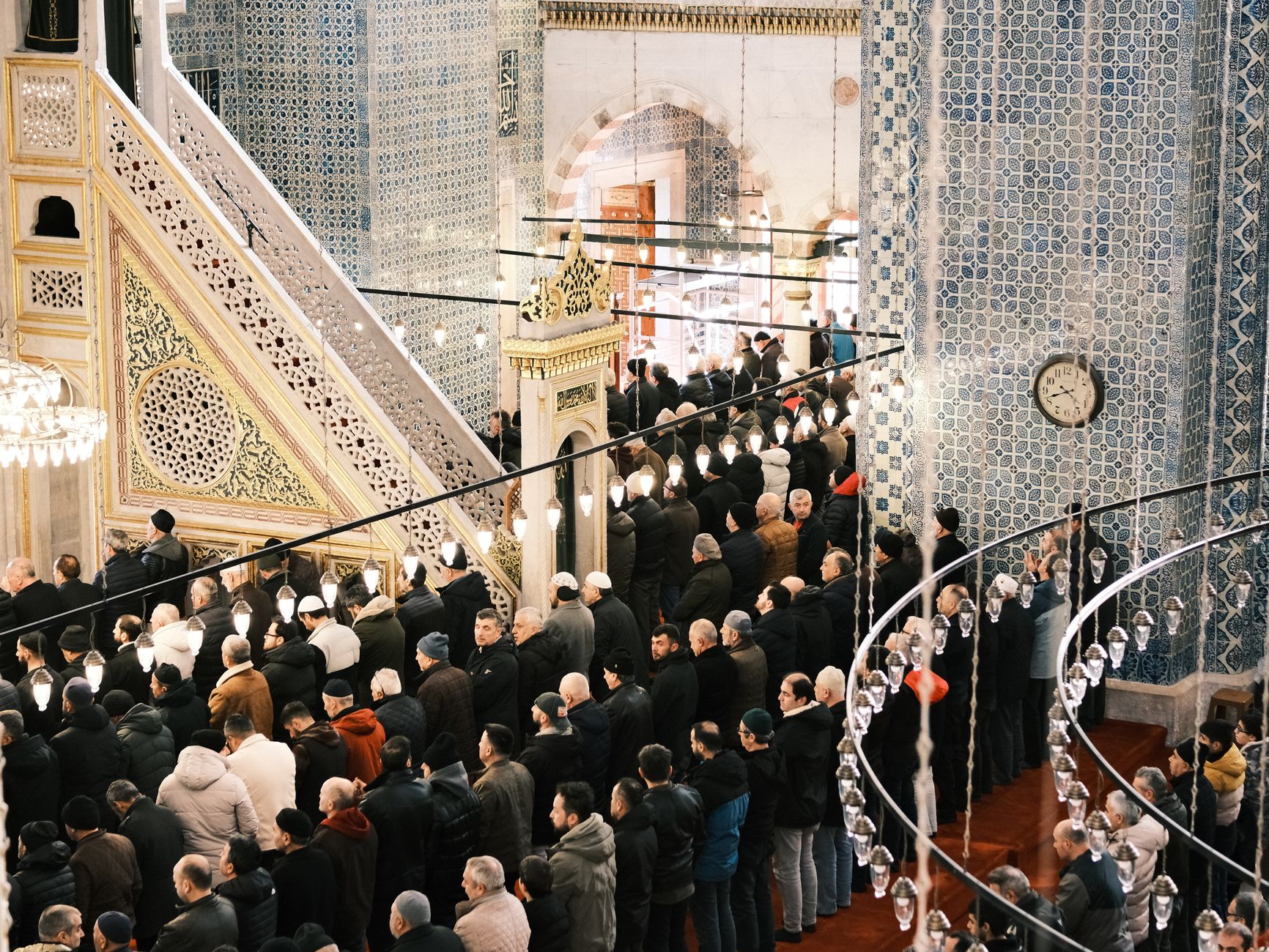
The most commonly cited reason among intellectually serious converts is the simplicity and coherence of Islamic monotheism. Tawḥīd (one God, no partners, no intermediaries, no incarnation, no Trinity) resolves theological puzzles that other traditions create. The convert who comes from Christianity often describes a sense of relief: the God they always believed in (one, transcendent, just, merciful) is the God Islam describes. The theological complications they could never quite accept (three persons in one substance, a God who dies, original sin requiring a divine sacrifice) dissolve under tawḥīd.
The convert who comes from atheism often describes a different path but a similar destination. The cosmological argument pointed to a first cause. The fine-tuning of the universe pointed to design. The moral argument pointed to a ground of value beyond human opinion. When they looked for the tradition that most faithfully described this God without adding unnecessary metaphysical complications, they found Islam.
The Quran’s voice
Many converts describe the Quran as the decisive factor. The decisive datum is the cumulative experience of reading a text that addresses the reader directly, with a voice unlike anything in their previous experience, rather than a specific verse or argument. The Quran does not read like a human production. It does not read like a committee document. The Quran reads like something speaking from beyond the human perspective, with a confidence, a coherence, and a self-awareness that no seventh-century Arabian merchant could plausibly have produced.
The observation is a piece of evidence the convert weighs alongside the philosophical arguments rather than a proof. The Quran’s challenge to “produce a sūrah like it” is an invitation to test the claim rather than mere rhetoric:
Fourteen centuries of Arabic literature have not produced a successful response. The challenge is not to produce a longer text or a more eloquent text or a more philosophically sophisticated text. The challenge is to produce a text of the same kind: one whose linguistic, structural, and rhetorical character matches what the Quran does. The challenge has been engaged seriously by Arab literary culture across centuries. The challenge has not been met.
The moral and social framework
Islam offers a comprehensive way of life: a moral, social, and spiritual architecture that addresses every dimension of human existence rather than just a set of beliefs. Prayer structures the day. Fasting structures the year. Zakāt structures economic life. The sharīʿah provides a framework for justice, family, commerce, and community. For the convert coming from secular modernity (where meaning is privatised, morality is subjective, and community is fragmented) the comprehensiveness is liberating rather than oppressive.
The khalīfah’s vocation is not abstract for the convert. It becomes practical: you are God’s representative on earth, and every dimension of your life (how you eat, how you work, how you treat your neighbour, how you spend your money) is part of that representation. The convert who found secular life meaningless often describes Islam as the moment meaning became concrete.
The fiṭrah recognition
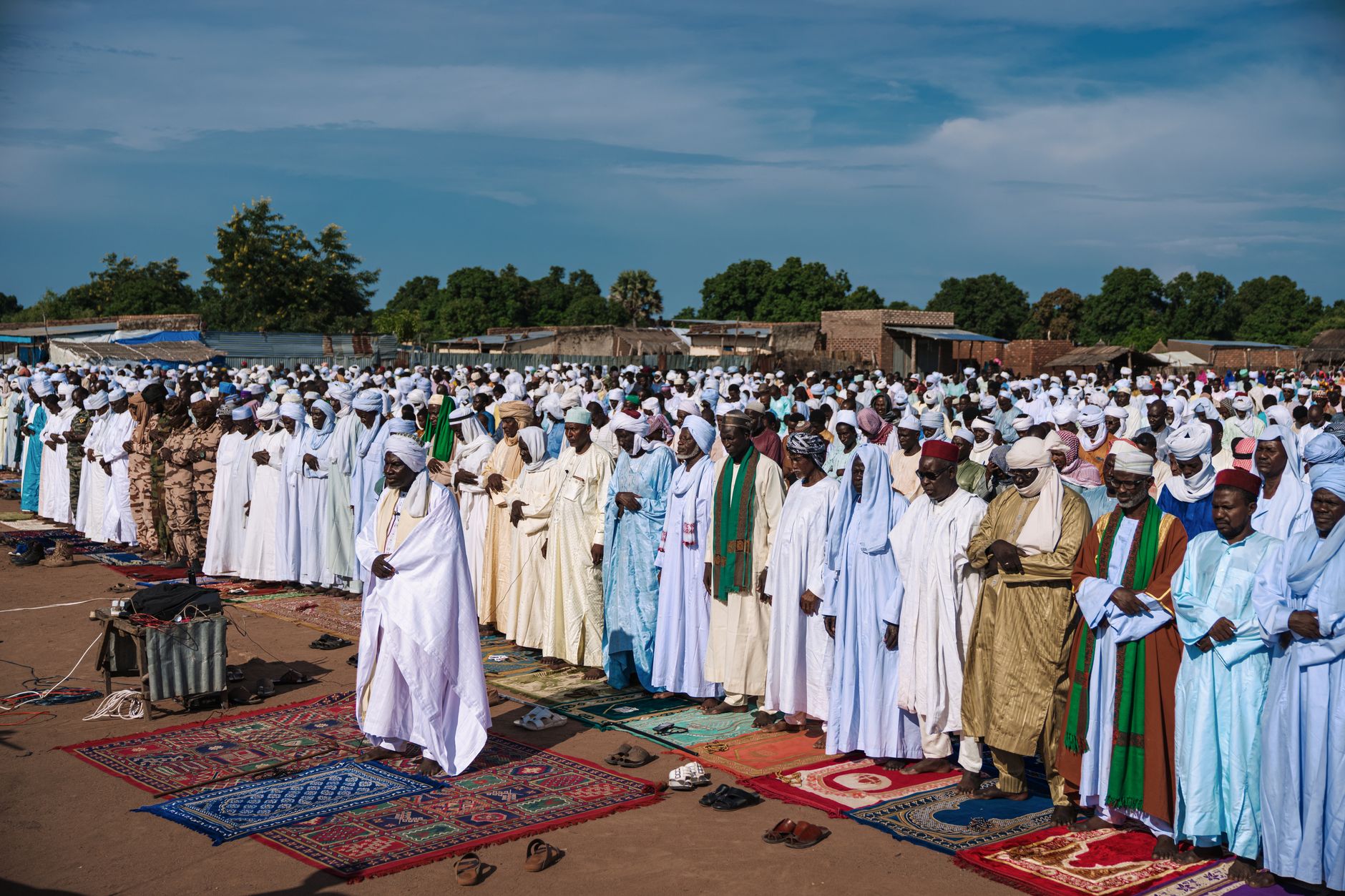
The Islamic concept of fiṭrah (the innate human disposition toward recognising God) predicts what many converts describe. They do not experience conversion as adopting something foreign. They experience it as recognising something they already knew. “I didn’t convert to Islam,” a common refrain goes. “I reverted.” The theological claim is that the orientation was always there, buried under cultural conditioning, suppressed by social pressure, obscured by bad experiences with other religions, but never destroyed. Conversion is the fiṭrah breaking through.
The Prophet ﷺ identified this directly in the canonical hadith on the universal default state of the human creature:
The hadith identifies the convert experience exactly. The “reversion” language used by Western converts is a recognition that they are returning to a default state that cultural overlays had obscured rather than abandoning their previous life. Whether the recognition is real depends on whether the fiṭrah is real. If the fiṭrah is real, the pattern of recognition the converts describe is exactly what the hadith would predict.

What the critics miss
Critics of Islam often assume that converts are naive, emotionally vulnerable, or poorly informed. The evidence does not support this. Studies of Western converts (Köse’s work in the UK, Roald’s in Scandinavia, van Nieuwkerk’s across Europe) show that many are well-educated, intellectually curious, and reached their decision after months or years of investigation. They read the objections. They encountered the critics. They weighed the evidence. They concluded that Islam was true.
The pattern does not prove Islam is true. The pattern does prove that the case for Islam is strong enough to persuade serious, independent, intellectually honest people who have no cultural or social reason to accept it. That is a datum the critic must account for. A religion that attracts converts through investigation (rather than through birth, coercion, or cultural inertia) is a religion whose arguments deserve serious engagement.
The convert’s testimony is evidence rather than proof: evidence that the case for Islam is strong enough to persuade people who had every reason not to be persuaded, who came from outside the tradition, who had no cultural or familial incentive to accept it, and who reached their conclusion through independent investigation. The critic who dismisses all converts as naive or manipulated must explain why so many educated, thoughtful, independent people keep arriving at the same conclusion. The simplest explanation is that the conclusion is available to anyone who examines the evidence honestly, which is what this entire site invites you to do.
The pattern of recognition
Many converts describe the moment of conversion not as a leap of faith but as a recognition: a sense that what Islam describes is what they already knew, at some level, to be true. The fiṭrah breaks through. The theology they could never accept in Christianity dissolves. The purposelessness they felt in atheism resolves. The God they always sensed but could never name is finally named.
The convert does not feel they are adopting something foreign. They feel they are coming home. Whether that feeling is evidence depends on whether fiṭrah is real. If it is, the pattern of recognition is exactly what one would expect, across cultures, across backgrounds, across every demographic category. The truth is available to anyone willing to look rather than partisan to any one starting position.