The charge comes most sharply from former Muslims who have become Christians. In Christianity, the argument runs, God is a father who loves his people and makes promises to them. In Islam, God is a tyrannical slave-master who commands and threatens, and a religion built on an abusive relationship produces abusive people. One such speaker told an interviewer that Muslims are “abused” by their religion from birth. The charge makes claims about the Quran that can be checked, and a psychological claim that deserves the same scrutiny.
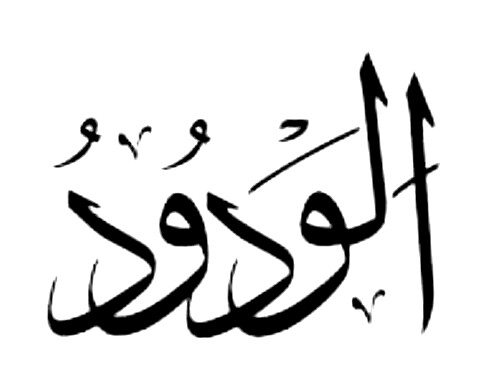
The Loving is one of God’s names
The Quran names God al-Wadūd (the Loving, the Affectionate).
The name appears again in Sūrat Hūd 11:90, paired with mercy. The verb of love runs throughout the text: God loves those who do good (2:195), those who keep their commitments (3:76), those who act justly (60:8). The relationship runs both ways. Sūrat al-Māʾidah 5:54 describes a people “whom He loves and who love Him,” and Sūrat Maryam 19:96 promises that the Most Merciful will create wudd (love) for those who believe and do good.
The Quran does not call God “Father.” Sūrat al-Ikhlāṣ declares that He neither begets nor was begotten (112:3), and the Quran guards that boundary carefully because it separates the Creator from the created. The refusal of the paternal title protects God’s transcendence. The love it expresses in other language is explicit and repeated.
| Verse | What it says |
|---|---|
| 85:14 | “He is the Forgiving, the Loving” |
| 11:90 | Al-Wadūd (the Loving), paired with mercy |
| 2:195 | God loves those who do good |
| 3:76 | God loves those who keep their commitments |
| 60:8 | God loves those who act justly |
| 5:54 | A people “whom He loves and who love Him” |
| 19:96 | The Most Merciful will create wudd (love) for those who believe and do good |
Mercy greater than a mother’s
When the critic contrasts a fatherly God with a tyrant, the Prophet’s own image answers him. Captives were brought to Medina, and among them a woman searching for her child. When she found him she clutched him to her and nursed him.
The Prophet also taught that God divided mercy into a hundred parts, kept ninety-nine with Himself and sent one into the world, and that from this single part every creature shows tenderness to its young (Ṣaḥīḥ al-Bukhārī 6000). God wrote upon Himself that His mercy prevails over His wrath (Ṣaḥīḥ al-Bukhārī 7404). The Quran states the same principle as a divine decree.
A God who runs toward His servant
An abusive master waits to punish. The God of the Quran and the Prophet’s teaching moves toward the one who turns to Him faster than that person moves toward God.
The last verse addresses people who have sinned against themselves, and calls them “My servants” in the same breath. The possessive expresses belonging. A tyrant’s slaves are property; these servants are called back by name after their worst failures.

Servanthood and freedom
The word the critic finds so offensive is ʿabd (servant, worshipper). In the Quranic view every human being serves something: wealth, status, appetite, a ruler, the approval of others. Servanthood to God, who needs nothing from His creatures, releases a person from servitude to all of these. The same Quran that calls believers servants of God tells them that God has honoured every child of Adam (17:70). A master who honours his servants above much of creation and runs toward them when they approach bears little resemblance to the tyrant of the charge.

Hell in both traditions
The critic points to the Quran’s descriptions of hell, including the replacement of burnt skin in 4:56, as proof of a sadistic God. A Christian making this argument faces his own scripture. Jesus in the Gospel of Matthew sends the cursed “into the eternal fire” (Matthew 25:41) and says they “will go away into eternal punishment” (Matthew 25:46). Mark describes a place “where their worm does not die, and the fire is not quenched” (Mark 9:48). The Quran and the Gospels both teach that rejecting God has eternal consequences. If warnings of hell make a religion abusive, the charge falls on Christianity by the same measure.
The site treats the justice of eternal punishment in its articles on hellfire and on finite sins and infinite punishment. The point here is narrower: the critic has chosen a standard his own faith cannot meet.
The psychological claim
The argument ends with a diagnosis: hurt people hurt people, Islam hurts Muslims, so Muslims hurt others. The speaker offered no evidence for the first link beyond the claim itself. The polling data discussed in the site’s article on terrorism shows large majorities of Muslims rejecting violence against civilians, which is hard to square with a population formed by abuse. A religion whose scripture opens nearly every chapter with the names of God “the Most Merciful, the Especially Merciful,” and whose adherents recite those names in every unit of prayer, forms its people around mercy by the plain count of their daily words.