The objection has a genuine edge. If God is self-sufficient, with no needs, no lacks, no dependencies, then worship appears to be something He asked for without needing. If He does not need worship, why make it central? Why build an entire religion around five prayers a day, pilgrimage, fasting, and constant remembrance? The question is worth pressing because the Islamic answer is more interesting than the objection expects.
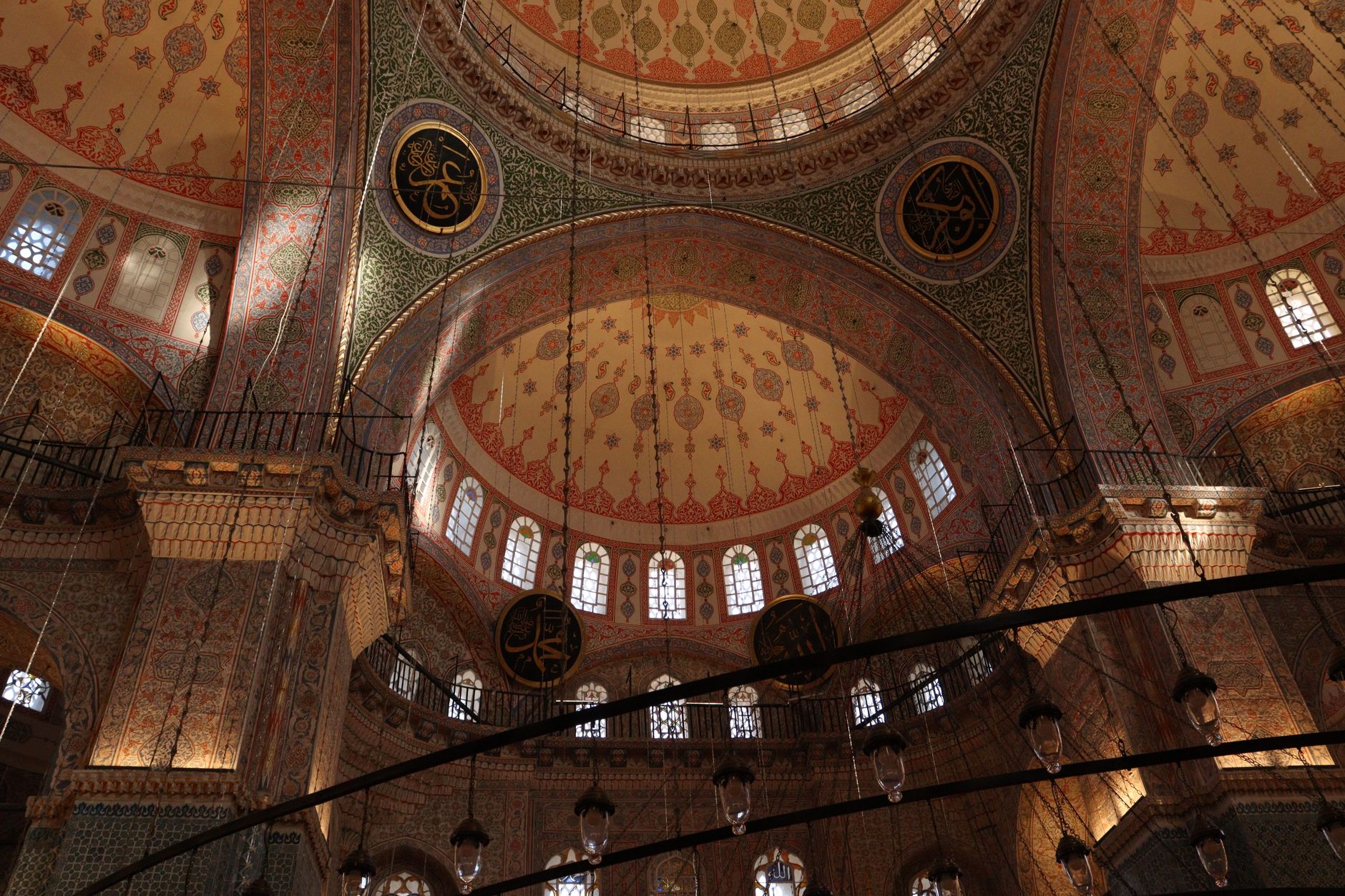
The Quran answers the question in the same passage where it raises it. The purpose of creation is worship, and God immediately clarifies that He requires nothing from it. The worship is for the benefit of the one performing it. The question then becomes: what kind of benefit?
The breadth of ʿibādah
The Islamic concept of ʿibādah (worship) is broader than ritual. The term encompasses the full orientation of a life: prayer, certainly, and also honesty, justice, care for the poor, gratitude, intellectual inquiry, and the conscious alignment of one’s will with the structure of reality as God made it.
The Prophet ﷺ included a smile within the framework of acts that count toward the worshipper’s account. The same framework includes seeking knowledge, feeding one’s family with honest earnings, removing harm from a public path, and visiting the sick. The category of worship in Islam covers ritual acts within a larger network of orientations and behaviours that together constitute a life conducted under God’s awareness.
On this account, worship is the mode of existence appropriate to what a human being actually is: a conscious, moral, dependent creature who is most fully themselves when living in conscious acknowledgment of that reality. The alternative (living as though one is self-sufficient, self-grounding, and answerable to nothing) is a form of existential dishonesty. The practice of worship in the Islamic account is the practice of being honest about what you are.
The analogy of gratitude
Consider gratitude between people. When someone does something genuinely good for you, the natural and appropriate response is gratitude. A person who receives great generosity and feels no impulse toward gratitude has something deficient in them, because the relationship between giver and receiver is expressed through acknowledgment. The thanks does not benefit the giver in any material sense. The thanks completes a moral reality that the gift created.
Worship stands in an analogous relation to God’s act of creation. God created conscious beings, gave them life, perception, reason, and the capacity for joy and love. Worship acknowledges that reality. The acknowledgment is not for God’s benefit (an insecure person might require validation, but God does not), and the absence of acknowledgment does not impoverish God. The acknowledgment completes the relationship from the human side. A conscious being that lives in complete denial of the ground of its existence is failing to be fully what it is, and worship is the practice that prevents that failure.
Why the form matters
The structured form of Islamic worship (the five prayers at specific times, the physical postures, the Arabic recitation) is sometimes presented as evidence of divine arbitrariness or neediness. Why these forms rather than others? Why not simply “be a good person”?
The forms serve the worshipper. Regular prayer interrupts the flow of a life that would otherwise be entirely absorbed in the immediate and the material. The interruption reorients attention toward what is real and lasting at intervals throughout the day. The physical postures (standing, bowing, prostrating) enact the relationship in the body, alongside the mind. The communal prayer aligns individual lives with a shared acknowledgment of God that creates community across differences of wealth, status, and background.
The classical scholar al-Ghazālī, in his Iḥyāʾ ʿulūm al-dīn, devotes substantial attention to the question of why ritual takes the specific form it does. His answer turns on the architecture of the human creature: a being whose consciousness is shaped by repeated bodily action, whose attention drifts without external structure, whose habits gradually become character. The ritual forms are calibrated to that architecture. A worshipper who prostrates 17 times a day across a lifetime has trained the body, the imagination, and the will to incline toward humility. The training does not happen in a single grand gesture. It happens in the repeated, structured, bodily act, performed at fixed intervals, sustained across decades.

The Quran’s own framing
The Quran returns to the theme of worship’s purpose with language that ties human flourishing to the practice itself.
The verse states the asymmetry plainly. Human beings need God; God does not need human beings. Worship is the practice that brings the asymmetry into conscious view, not the act that pretends to reverse it. A human being who lives in steady awareness of dependence on God has aligned their inner life with the actual structure of reality. A human being who lives as though they are self-grounded has aligned their inner life with a fiction that the basic conditions of human existence (mortality, fragility, dependence on circumstances they did not create) eventually expose.
The hadith qudsī that clarifies the matter
The hadith states the Islamic answer plainly. God needs nothing. Worship changes nothing for God. What worship changes is the worshipper: the orientation, the attention, the character, the relationship with reality that the practice of regular acknowledgment builds over time. The question “why does God demand worship if He does not need it?” dissolves once the frame shifts. God does not demand worship for Himself. God prescribed worship for the benefit of the beings He made for whom worship is the natural and completing act of their existence.
The whole frame of the original objection (a needy God demanding tribute) describes a deity Islamic theology specifically rejects. The God of Islam asks for worship the way a doctor prescribes medicine: not because the doctor needs the patient to take it, but because the medicine works for the patient. The five daily prayers, the fast of Ramadan, the giving of zakat, the pilgrimage to Mecca: each functions as a structured practice that produces effects in the worshipper which no amount of unstructured good intention can produce.
The objection identifies a real question. The Islamic answer is that the question has been understood and addressed within the tradition from its earliest period, and the answer has not been a defensive retreat. It has been the consistent position that the entire purpose of the practice is the worshipper’s own flourishing.