The objection has a sharp formulation. An infinite God who needs anything (worship, praise, belief) is not truly infinite. A God who punishes disbelief looks like a God with an ego problem. The worship requirement sounds less like the command of an unlimited being and more like the demand of an insecure one. The objection deserves a serious response because it rests on a genuine philosophical intuition about what infinity entails.

The intuition itself is correct. A truly unlimited God would not be diminished by human disbelief and would not need anything from human beings. Where the objection goes wrong is in what it concludes from that observation. The Islamic position arrives at the same starting point and draws the opposite conclusion.
God does not need worship
The Islamic tradition is explicit on this point and has been from its earliest period. God is al-Ṣamad (the eternally self-sufficient, the One upon whom all things depend without Himself depending on anything). The verses that establish the purpose of creation immediately clarify what that purpose is not.
The two verses sit side by side. The purpose is worship; the purpose is also categorically not for God’s benefit. The clarification is built into the verse that establishes the obligation, and it forecloses the reading the objection assumes.
The same point recurs in stronger language elsewhere in the Quran:
The pleasure described is the response of a good being to the good behaviour of the beings it loves, not the satisfaction of a need. The Arabic ghaniyy (rich, free of need) is repeated across the Quran whenever the subject of God’s relationship to creation arises. The position is settled at the level of doctrine: God is not enriched by worship and is not impoverished by its absence.
The contrast with pagan theologies
The objection assumes the worship requirement reflects divine neediness. The historical context for that assumption matters. The pagan religions of the ancient Near East, Greece, Rome, and Mesopotamia all featured gods who genuinely needed sacrifice. The gods of these systems were powerful but limited beings, dependent on the offerings of their worshippers for sustenance, satisfaction, or the maintenance of their cosmic functions. Greek gods feasted on the smoke of burnt offerings. Mesopotamian temples literally fed their gods. The Roman sacrificial system operated on a calculated exchange: do ut des (I give that you may give).
The Islamic critique of paganism includes exactly this: the conception of gods who could be bargained with, fed, or weakened by neglect. The Quran’s response to a related theme of pre-Islamic Arabian sacrifice is direct.
The verse settles a question that pagan theologies took for granted. God receives nothing from the act of sacrifice itself. What enters the moral economy is the inner state of the worshipper. The same logic applies to ṣalāh, fasting, and every other act of worship: the act produces effects, but the effects land in the worshipper, not in God.
What worship does for the worshipper
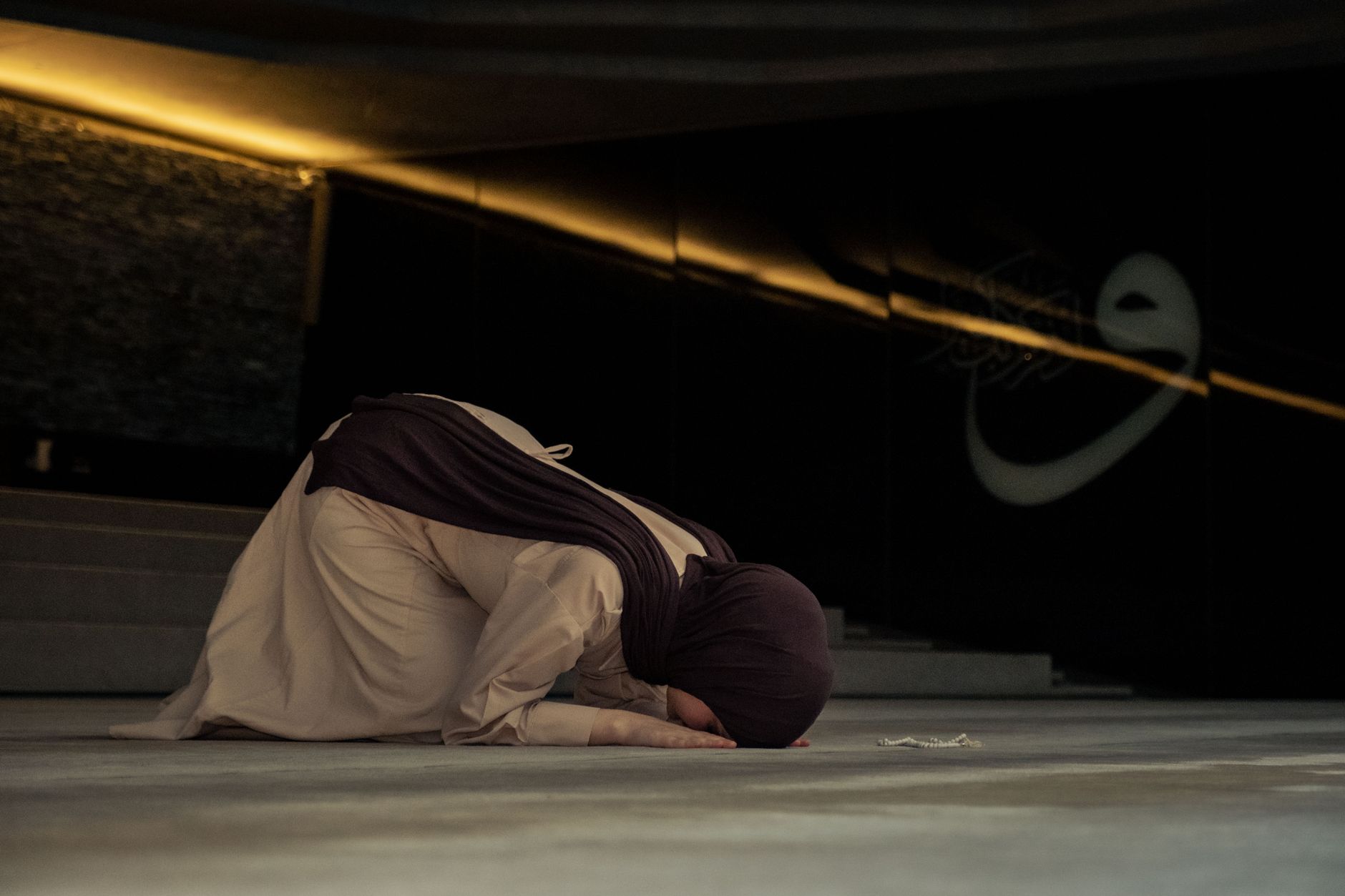
Once it is clear that worship is not a transfer to God, the question shifts. What is worship for? The Islamic answer points to the worshipper’s own formation.
Consider what happens to a conscious being who spends a life in recognition of its own contingency. Such a being lives in awareness that it exists by the gift of another, that its consciousness is not self-produced, that the moral order it works within is not of its own invention. The result is a kind of rootedness and proportion that is difficult to access by other means. The practice of worship (prayer, remembrance, regular orientation toward something greater than oneself) is the practice of maintaining that rootedness against the constant human temptation toward the illusion of self-sufficiency.
Consider the contrasting case. A conscious being that lives as though it is the source of its own existence, the author of its own values, the ultimate reference point for its own judgements, is not liberated by that posture. Such a being is inflated. Inflation, in the psychological sense, produces the very fragility it claims to avoid: the collapse that comes when circumstances make the illusion of self-sufficiency impossible to maintain. Modern psychology has identified this pattern repeatedly under various names (narcissistic vulnerability, grandiosity collapse, existential anxiety). The classical Islamic intellectual tradition identified the same pattern centuries earlier and called it ʿujb (self-amazement, the inflated self-regard that ends in collapse).
The hadith qudsī that settles the matter
The hadith states the position with finality. The total piety of every conscious being who ever existed adds nothing to God. The total corruption of every conscious being who ever existed subtracts nothing. The traffic between God and creation runs in one direction: from God to the created order. Worship is the conscious recognition of that traffic, performed by beings whose flourishing depends on getting the direction right.

The question of compulsion
The Quran is explicit that there is no compulsion in religion (Sūrat al-Baqarah 2:256). Belief that is compelled does not function as belief in any meaningful sense; it is performance under duress. God’s interest, on the Islamic account, is in genuine recognition: the consciousness that freely turns toward its source. The behaviour that fear or social pressure produces does not satisfy the criterion the tradition establishes.
The existence of apostasy laws in various historical contexts reflects human political interests, not divine ones. A God who knows what is in every heart has no need of enforced profession. The Islamic theological tradition has the resources to distinguish the political enforcement of religious identity (a contingent feature of pre-modern states, including pre-modern Christian and Jewish ones) from the divine assessment of the inner state, which the texts repeatedly insist no human authority can adjudicate.
What the command actually says
Worship, on the Islamic account, is the natural response of a being that has genuinely understood its situation: a being that has grasped what it is, where it came from, and what it is oriented toward. The command to worship reads, when stated plainly: turn toward what is actually real, and see what happens to the rest of your life when you do. The God who issues that command issues it for the benefit of the one receiving it, in the same way a doctor’s instruction to take prescribed medication is given for the patient’s benefit and not for the doctor’s.
The whole frame of the original objection (an infinite God demanding tribute) describes a God Islamic theology specifically rejects. The God of Islam is too great to be diminished by human refusal and too generous to issue commands for His own benefit. The commands issued are issued for the worshipper’s good. The choice to follow them or refuse them lands its consequences in the worshipper, not in God.