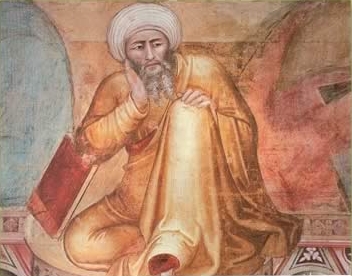
Islamic civilisation produced its own internal critics, and that fact matters more than either side usually admits. Al-Rāzī questioned prophecy. Ibn al-Rāwandī challenged theological orthodoxy. Abū al-ʿAlāʾ al-Maʿarrī wrote poetry dripping with religious scepticism. The Muʿtazilites pushed rationalism to conclusions that alarmed the traditionalists. Critics of Islam cite these figures as evidence that even Muslims could see through the religion. Defenders sometimes try to minimise them. Both responses miss the point.
What their existence proves
The existence of Muslim freethinkers proves that Islamic civilisation was not intellectually airless. It had room for radical disagreement, fierce debate, and positions that would be considered heretical by any standard. The room for dissent is a sign of intellectual vitality, not a weakness. A civilisation that produces no internal critics is either so repressive that dissent is invisible or so shallow that nobody bothers to think deeply enough to disagree. Islamic civilisation was neither.
The Quranic instruction on intellectual engagement is itself an instruction in how to handle disagreement seriously:
The verse instructs the believer to listen across positions and to identify the strongest version of what is being said. The instruction presupposes that the believer’s encounter with rival arguments is not itself a betrayal of faith. The encounter is the practice of faith. The classical Islamic tradition took this seriously and produced a literature of debate, refutation, and counter-refutation that was genuinely engaged rather than dismissive. The freethinkers operated within a context the verse describes: people listening to many positions and trying to identify the best.
The concept of God’s sunan (immutable patterns implanted in creation) extends beyond the natural world. There are intellectual sunan too: the patterns of honest inquiry that, when followed, lead toward truth rather than away from it. The freethinkers followed those patterns further than the mainstream was comfortable with. The patterns themselves (reason, evidence, logical consistency) were tools the Islamic tradition had forged and honoured. The khalīfah’s vocation is to understand, not merely to obey. A tradition that produces thinkers who push the boundaries of understanding is a tradition fulfilling its own mandate.
The freethinkers operated within a context shaped by Islam’s own principles. The Quran commands reflection, reason, and investigation. The hadith tradition preserves sharp disagreements between the companions. The legal schools developed sophisticated methods of argumentation precisely because disagreement was expected and managed rather than eliminated. The freethinkers pushed those principles further than the mainstream was comfortable with, while working with tools the tradition itself had forged.
What their existence does not prove
The existence of internal critics does not prove Islam is false, any more than the existence of atheist philosophers in Christian Europe proves Christianity is false, or the existence of Cārvāka materialists in ancient India proves Hinduism is false. Every serious intellectual tradition produces dissent. The question is whether the tradition can answer its critics, not whether critics exist.
The Islamic tradition did answer them. Al-Ghazālī’s Tahāfut al-Falāsifah (The Incoherence of the Philosophers) was a direct philosophical response to positions that Ibn Sīnā and others had advanced. The Ashʿarī and Māturīdī theological schools developed precisely to address rationalist challenges with rigorous counter-arguments. The tradition did not collapse under criticism. The tradition absorbed it, responded to it, and in many cases was strengthened by it.
The Prophetic instruction on disagreement
The Prophet ﷺ established the model for honest scholarly disagreement directly:
The hadith establishes a principle that has shaped Islamic legal and theological practice for fourteen centuries. Honest intellectual effort is rewarded even when it produces a wrong conclusion, on the condition that the effort was genuine and the methodology was sound. The principle has institutional consequences. A tradition that rewards honest disagreement does not need to produce uniformity. The tradition produces, instead, a structured and respectful pluralism in which different schools, methods, and conclusions can coexist without anyone being treated as a heretic for the offence of having reasoned carefully.
The unity of truth
The principle of the unity of truth is relevant here. If truth is one, then rational inquiry, even radical rational inquiry, cannot ultimately threaten it. Inadequate formulations of truth are what such inquiry threatens. The freethinkers forced the tradition to sharpen its arguments, clarify its positions, and distinguish between what was essential to tawḥīd and what was merely cultural accumulation. The process was sometimes painful. The process was also productive.
The fact that Islamic civilisation could host profound disagreement while continuing to reproduce a sturdy case for revelation is evidence that Islam’s first principles can sustain a serious intellectual order rather than merely protect a fragile orthodoxy. A tradition that survives its own critics is sturdier than one that has never been tested.

The real lesson
The freethinkers Islam produced are evidence of a civilisation that took ideas seriously enough to fight about them, rather than ammunition for or against Islam. The question for the contemporary reader is not “did Muslims ever doubt?” Of course they did. The question is whether the arguments that survived the doubting are strong. That question can only be answered by examining those arguments directly, not by pointing to the existence of doubters as though doubt were a conclusion rather than a starting point.
The tradition’s resilience
Consider what the freethinkers’ existence actually demonstrates about Islam’s intellectual resilience. Al-Rāzī questioned prophecy, and the tradition responded with sophisticated defences of prophetic necessity that addressed his specific arguments. Ibn al-Rāwandī challenged orthodox theology, and the mutakallimūn developed more precise philosophical tools in response. Al-Maʿarrī wrote sceptical poetry, and the tradition continued to produce devotional poetry of extraordinary power alongside it. At no point did the challenges destroy the tradition. At every point, they strengthened it.
The pattern of challenge, response, refinement is the hallmark of a living intellectual tradition. Traditions that cannot survive internal criticism are brittle. Traditions that can are sturdy. Islam’s ability to produce freethinkers and survive them is evidence of intellectual depth rather than embarrassment.
The modern reader encountering Muslim freethinkers for the first time should ask not “did Muslims doubt?” but “what happened to the doubts?” If the doubts were answered, the answers deserve examination. If they were suppressed, the suppression was a failure of specific institutions rather than of Islam’s first principles. If some doubts remain genuinely unresolved, that is the condition of every serious intellectual tradition in history, including the naturalism that many doubters adopt as a replacement, which carries its own unresolved problems about consciousness, morality, meaning, and the foundations of reason itself.
The final irony is worth noting. The modern online atheist who cites Muslim freethinkers as evidence against Islam is often unaware that the tradition they are attacking is the very tradition that gave those freethinkers the intellectual tools, the literate culture, the institutional support, and the freedom to think as they did. Al-Rāzī did not develop his philosophical positions in a vacuum. He developed them within a civilisation that valued rational inquiry because its founding text commanded it. The freethinkers Islam produced are evidence that Islam created the conditions in which serious thought (including dissenting thought) could flourish, rather than evidence that Islam suppresses thought.
The tradition that produced al-Kindī, Ibn Sīnā, al-Bīrūnī, Ibn Rushd, al-Khwārizmī, and Ibn Khaldūn is a tradition that channelled thought toward the deepest questions (God, truth, justice, the nature of reality) and trusted that honest inquiry, pursued to its end, would confirm rather than undermine its first principles. The trust has been tested for fourteen centuries. The freethinkers were part of the test. The tradition is still here.