The contemporary narrative, particularly in Western popular culture, positions religion and science as natural enemies, with Islam frequently presented as especially resistant to scientific inquiry. The narrative is not supported by history.
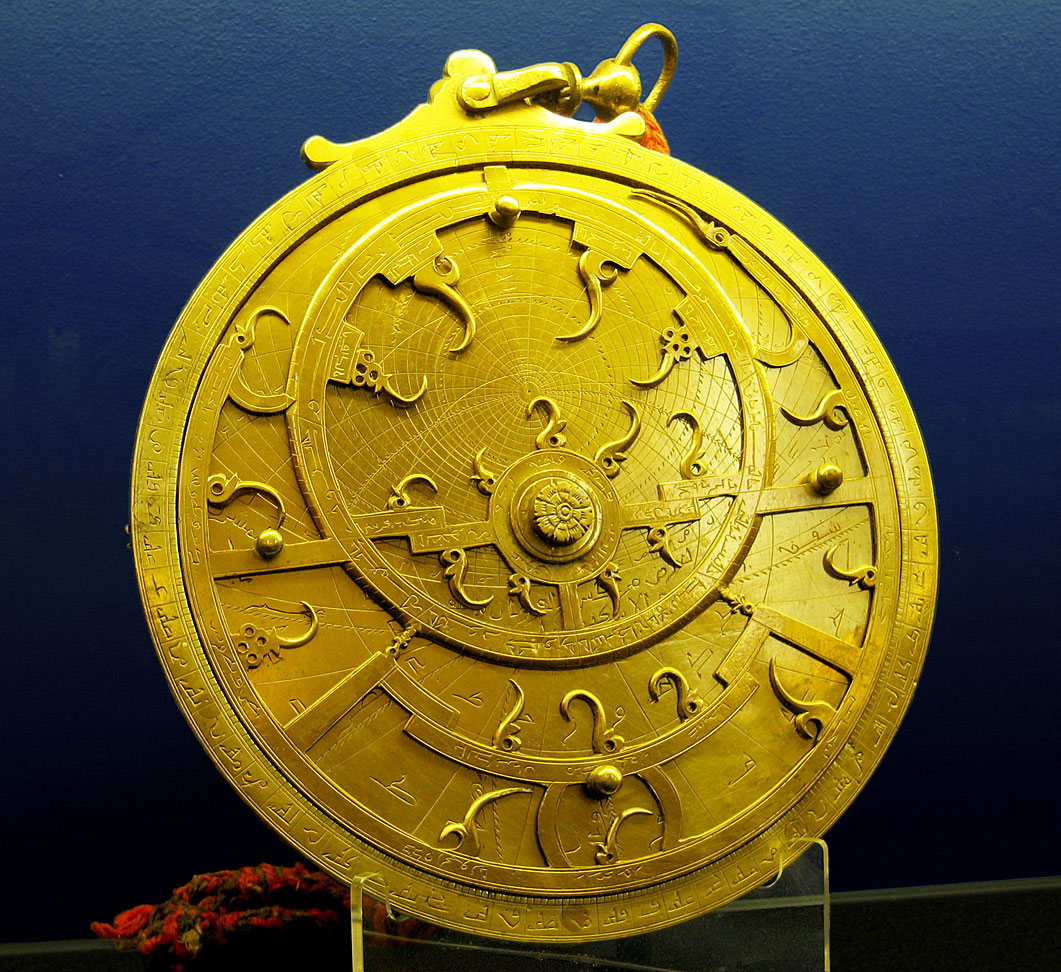
From roughly the eighth to the thirteenth century, Islamic civilisation was the most scientifically productive in the world. The House of Wisdom in Baghdad systematically translated and extended Greek scientific knowledge. Muslim scholars made foundational contributions to optics, astronomy, algebra, medicine, chemistry, and philosophy. Much of what Europe learned of ancient Greek science came through Arabic intermediaries.
The first revealed word
The Quranic foundation for the relationship between Islam and learning is established by the very first verse revealed to the Prophet ﷺ:
The first command of the entire revelation is the imperative to read. The pen and the human’s relationship to acquired knowledge are placed at the centre of the opening. The reading is anchored in the name of the Lord who created, locating learning within an act of worship rather than against it. The Islamic intellectual tradition takes its starting position from this verse: knowledge is not a peripheral concern of the faith. Knowledge is the first thing the faith asks of its adherents.
The theological foundations
Islamic theology does not treat scientific inquiry as a threat. The Quran repeatedly calls on its readers to observe, reflect on, and reason about the natural world. The created order is presented as a sign of God, something to be read and understood rather than treated with suspicion. Several hundred Quranic verses explicitly call for observation and reflection on natural phenomena. Islamic jurisprudence developed detailed methods of rational reasoning that influenced the development of formal logic in Europe.
The Quran also draws an explicit hierarchy that places those who know above those who do not:
The verse does not treat ignorance as spiritually neutral. The verse identifies knowledge as the qualifying condition for the kind of remembrance and reflection that religious life requires. The classical Islamic tradition read this as a charter for serious intellectual work in every field where understanding could be developed.
The Prophet ﷺ stated the position even more directly:
The hadith establishes the obligation as universal. The seeking of knowledge is not the speciality of a clerical class. Every Muslim is required to learn, and the tradition has historically treated this requirement as covering both the religious sciences and what classical Islamic scholars called the rational sciences (al-ʿulūm al-ʿaqliyyah): mathematics, medicine, astronomy, natural philosophy, logic.
The classical achievement
The classical Islamic intellectual tradition was receptive to Greek science and went well beyond reception. The tradition critically engaged, corrected, and extended Greek work. The astronomer Ibn al-Haytham developed what historians recognise as one of the earliest systematic experimental methods, seven centuries before Bacon. The physician Ibn Sīnā’s Canon of Medicine was used in European medical schools until the seventeenth century. Al-Bīrūnī’s techniques for measuring the earth’s circumference were among the most accurate of the medieval world. The mathematicians of the period gave the world the decimal place-value system, the foundations of algebra (the word itself is Arabic), and the trigonometric methods that made later astronomical work possible.
The scholars who did this work were not exceptions to the religious tradition. They were participants in it. Ibn al-Haytham wrote his work on optics within an Islamic intellectual frame that treated the investigation of God’s creation as a religiously meritorious activity. Al-Bīrūnī was a serious student of comparative religion who took both his Islamic faith and his scientific work as parts of a single intellectual project.

The tension with scientism
Where Islam does conflict with the contemporary scientific worldview, the conflict runs against scientism rather than against science. Scientism is the philosophical position that science is the only reliable method of knowledge acquisition. Islam affirms the reliability of reason and empirical inquiry within their proper domains. Islam denies that those domains exhaust reality.
The position is shared by most contemporary philosophers of science, who distinguish between the legitimate authority of science within its empirical scope and the illegitimate extension of that authority to metaphysical questions science was never designed to address. The conflict between Islam and modern Western culture is partly a conflict between a tradition that affirms the reality of the non-physical and a cultural moment that is tempted to deny it.

What this means for honest inquiry
A person approaching Islam from a scientific background should not expect a tradition hostile to their intellectual commitments. The classical Islamic tradition is deeply comfortable with rigorous rational inquiry; the tradition developed methods of it that influenced the Western tradition. The tradition’s claim is that reason, followed honestly and to its conclusions, leads toward God rather than away from Him.
The cumulative force of the argument is stronger than a bare claim that something transcendent exists. It points toward a single source of reality, reason, and moral order. From there, Islam presents itself not as an arbitrary addition but as the most disciplined continuation of that line of thought.
The theological grammar of Islamic science
The Islamic scientific tradition was a consequence of tawḥīd. If God is one and His sunan (immutable patterns) govern all of creation, then investigating those patterns is a form of worship. The principle of the unity of truth meant that Muslim scientists pursued natural philosophy without the faith-against-reason anxiety that paralysed medieval Christendom. Science and revelation came from the same Author. Studying one could not contradict the other.
The Islamic scientific tradition arose because of Islam, not despite it. The concept of sunan gave Muslim scientists a theological reason to trust that nature is orderly, investigable, and lawful. Tawḥīd provided the framework: one God, one truth, one coherent creation. The unity of truth meant that discovering the laws of nature confirmed revelation’s Author rather than competing with revelation. The first command of the revelation was to read. The civilisation that took the command seriously did exactly that, and produced six centuries of scientific work whose echoes are still present in every modern textbook of optics, mathematics, medicine, and astronomy.