The charge has a particular sting because it is partly true. Some versions of Islam as practised and preached have relied heavily on fear: fear of hell, fear of divine punishment, fear of community judgement. These versions exist, and their damage is real. People raised in religious environments where God was primarily a surveillance mechanism and hell was the primary motivator for compliance have sometimes emerged psychologically damaged. To pretend otherwise is dishonest.

The argument moves from “some implementations of Islam use fear as a control mechanism” to “Islam is built on fear and control.” That step does not follow, and examining it reveals something important about the tradition.
What the tradition actually prioritises
The Islamic theological tradition is built on a tripartite structure: khawf (fear), rajāʾ (hope), and maḥabbah (love). None of these is supposed to operate alone. The tradition explicitly teaches that a believer who relies only on fear becomes despairing (hopeless about divine mercy and therefore paralysed). A believer who relies only on hope becomes complacent (assuming forgiveness without taking moral responsibility seriously). The ideal is the integration of all three: fear of accountability, hope in mercy, and love of God as the ultimate ground of the relationship.
The Quran opens with al-Fātiḥah, a chapter that addresses God as al-Raḥmān al-Raḥīm (the Most Merciful, the Most Compassionate). These names appear over 160 times across the Quran. The chapter most associated with divine mercy (Sūrat al-Raḥmān, “The Most Merciful”) is among the most beloved and widely recited. A tradition built primarily on fear would not centre its opening chapter and one of its most beloved sūrahs on mercy.
The hadith establishes a structural picture of the divine character that the polemical reading of Islam has trouble accommodating. The mercy God dispenses across all of creation (animals, humans, jinn, every form of compassion that exists in the world) is described as one part of one hundred. The remaining ninety-nine parts are reserved for the Day of Judgement. The arithmetic the hadith offers is the inversion of the standard polemical picture. The day described in cultural memory as the day of judgement and punishment is, in the prophetic teaching, the day on which the overwhelming majority of God’s mercy is finally released.
The Quranic priority of mercy
The Quran is even more direct about the structural priority of mercy in God’s character:
The verse uses unusual grammatical force. God has not merely chosen to be merciful, on this account; God has imposed mercy upon Himself as a structural feature of His own nature. The verb kataba (to write, to prescribe, to make obligatory) is the same verb used elsewhere in the Quran for binding religious obligations. The verse uses it to describe God’s relationship to His own mercy: mercy is structurally prior to everything else, not optional, not occasional, not contingent on good behaviour in God’s relationship to creation.
Fear as one dimension of moral seriousness
Every serious moral framework includes a dimension of accountability: a recognition that actions have consequences, that there are things one ought not do, and that the failure to observe moral obligations matters. The Islamic tradition’s emphasis on judgement and accountability is an expression of moral seriousness rather than a control mechanism added to suppress people: that human choices are real, that they matter, and that they will be answered for.
The alternative (a God who makes no demands, extends unconditional approval regardless of how a person lives, and exercises no judgement) is not obviously more just. It is a God who is indifferent to human moral failure, which is its own kind of problem. The Islamic God judges because human actions matter, rather than because He is a tyrant who needs obedience.
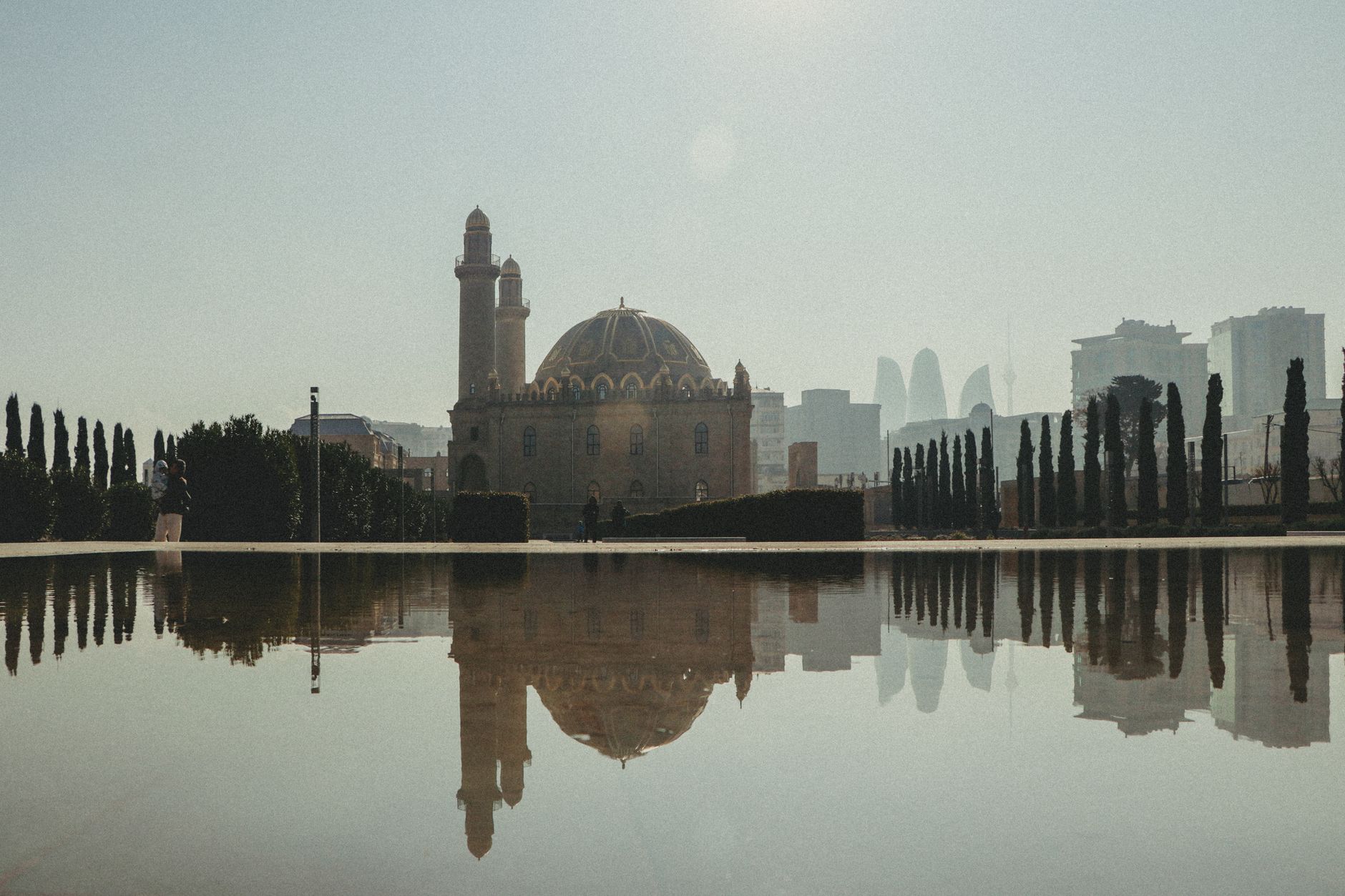
Control and liberation
There is a deeper point worth making. The communities that have used religion as a control mechanism (using hell to keep women in line, using apostasy-and-freedom/" class="ce-crosslink" title="Why Can’t People Leave Islam Without Consequences?">blasphemy laws to suppress dissent, using apostasy fear to prevent sincere inquiry) have been doing something that the tradition’s own resources argue against. The Quran says there is no compulsion in religion. It says God judges the heart, not the performance. It repeatedly criticises those who follow their ancestors without thought.
The Islam built on fear and control is a distortion of a tradition that has resources for self-correction built into it. The honest intellectual engagement this site is trying to support is exactly what the tradition asks for: examining the arguments, following them seriously, not accepting by rote or rejecting by reflex. That is the opposite of a control system. It is an invitation to think.
The Prophetic teaching on the believer’s relationship to God
The Prophet ﷺ described the structure of the believer’s life in terms that are decisive for the question of fear-based motivation:
The hadith identifies a structural feature of the believer’s existence that is incompatible with the fear-based caricature. The believer’s situation, as the Prophet describes it, is asymmetric in a particular way: every condition that arises (pleasant or unpleasant) becomes material for spiritual development through the response it provokes. The orientation is not crouched, terrified, awaiting punishment. The orientation is upward, alert, responsive, finding good in every condition. The believer’s relationship to reality, on this teaching, is one of trust, with fear and hope playing their proper proportional roles within that larger trust.

Why moral seriousness is not fear
The conflation in the polemical reading is between moral seriousness and fear-based control. They are not the same thing. Moral seriousness says: your choices matter, what you do has consequences, the universe is the kind of place where actions and outcomes are meaningfully connected. Fear-based control says: do what you are told or you will suffer. These produce very different psychological patterns in the people who internalise them.
The believer who has internalised Islamic moral seriousness experiences their life as meaningful in a way that the materialist alternative does not provide. Every act, every intention, every encounter has weight. The weight is not crushing; it is dignifying. To be a moral agent in a universe where moral agency matters is to be in a different existential position from being a biological mechanism in a universe of indifferent processes. The Quranic account of human life is the first option. The fear-based caricature is the second option projected back onto the first.
The framework
The God Islam describes is the God whose mercy precedes His wrath, who has structurally prescribed mercy upon Himself, who reserves ninety-nine parts of His mercy for the day of judgement, who explicitly forbids the compulsion of belief, and who criticises blind adherence to ancestral practice. The fear-based caricature requires the systematic suppression of every one of these features of the foundational texts.
Islam, read at full strength from its own sources, is a tradition of moral seriousness within a framework of overwhelming mercy. The fear-based versions some Muslims have lived under are betrayals of this framework, rather than expressions of it. The recovery of the framework is what the tradition’s own deepest principles ask of every generation that inherits the tradition.