The critique lands hard in two places: that Islamic ritual purity law treats natural bodily functions as spiritually polluting, and that it singles out women during menstruation as “impure” in a way that implies moral deficiency. Both readings are wrong, but they are wrong in ways that require explaining what the law is actually doing rather than simply asserting that the critics have misread it.
What ritual purity is and is not
Islamic purity law (ṭahārah) distinguishes between physical cleanliness and ritual purity. Ritual purity (the state required for certain acts of worship) is not a statement about a person’s moral worth, their proximity to God, or their human dignity. It is a precondition for specific ritual acts in the same way that certain conditions are required for specific practical acts. A surgeon who has not scrubbed is not a lesser human being; they are in a state that is inappropriate for operating. A Muslim who has not performed wuḍūʾ (ritual ablution) is not a worse person; they are not in the state required for ṣalāh.
The distinction between ritual state and moral worth is fundamental to understanding the law. The Quran does not say that a person in a state of ritual impurity is sinful, contaminated, or distant from God in any ultimate sense. It says they should not perform ṣalāh until they restore the ritual state. The two things are categorically different.
What the Quran actually says about menstruation
The Quranic term used for menstruation is adhā: harm, discomfort, or difficulty. The framing is a consideration for the woman’s wellbeing rather than a declaration of spiritual contamination. The instruction to men to “keep away” during this period is a directive about sexual intercourse during a time of physical discomfort, not a command to shun women as ritually dangerous. The verse continues: “When they have purified themselves, you may approach them in the manner God has ordained.” The frame is compassion and physical consideration, not pollution management.
The Prophet on intimate contact during menstruation
The Prophet’s ﷺ own practice settled the question of how the menstruating woman was to be treated within the household. The umm al-muʾminīn ʿĀʾishah (may God be pleased with her) narrated:
The hadith is decisive for the question of how Islam treats the menstruating woman. The Prophet ﷺ reclined in her lap. He recited the Quran in physical contact with her body during her period. The proximity was not avoided. The menstruating wife was not banished from the home, the bedroom, or the most spiritually significant act the Prophet performed (the recitation of revelation). The pollution-and-shunning frame the polemical critique attributes to Islam is precisely what the Prophet’s practice excludes. A tradition whose Prophet’s example is on the record in this form cannot coherently be claimed as a tradition that treats women’s bodies as spiritually dangerous.
Exemption versus punishment
During menstruation, Islamic law suspends the obligation of ṣalāh and fasting, and restricts certain interactions with the Quranic text in some juristic traditions. The suspension of obligation is significant: the woman is not failing to pray. She is exempt from prayer. The missed prayers are not made up after the period ends. This is the opposite of the treatment one would expect if menstruation were framed as a moral failure. Sins require expiation; exemptions from obligations do not. The woman is relieved of a duty, not penalised for a deficiency.
The embodied nature of worship
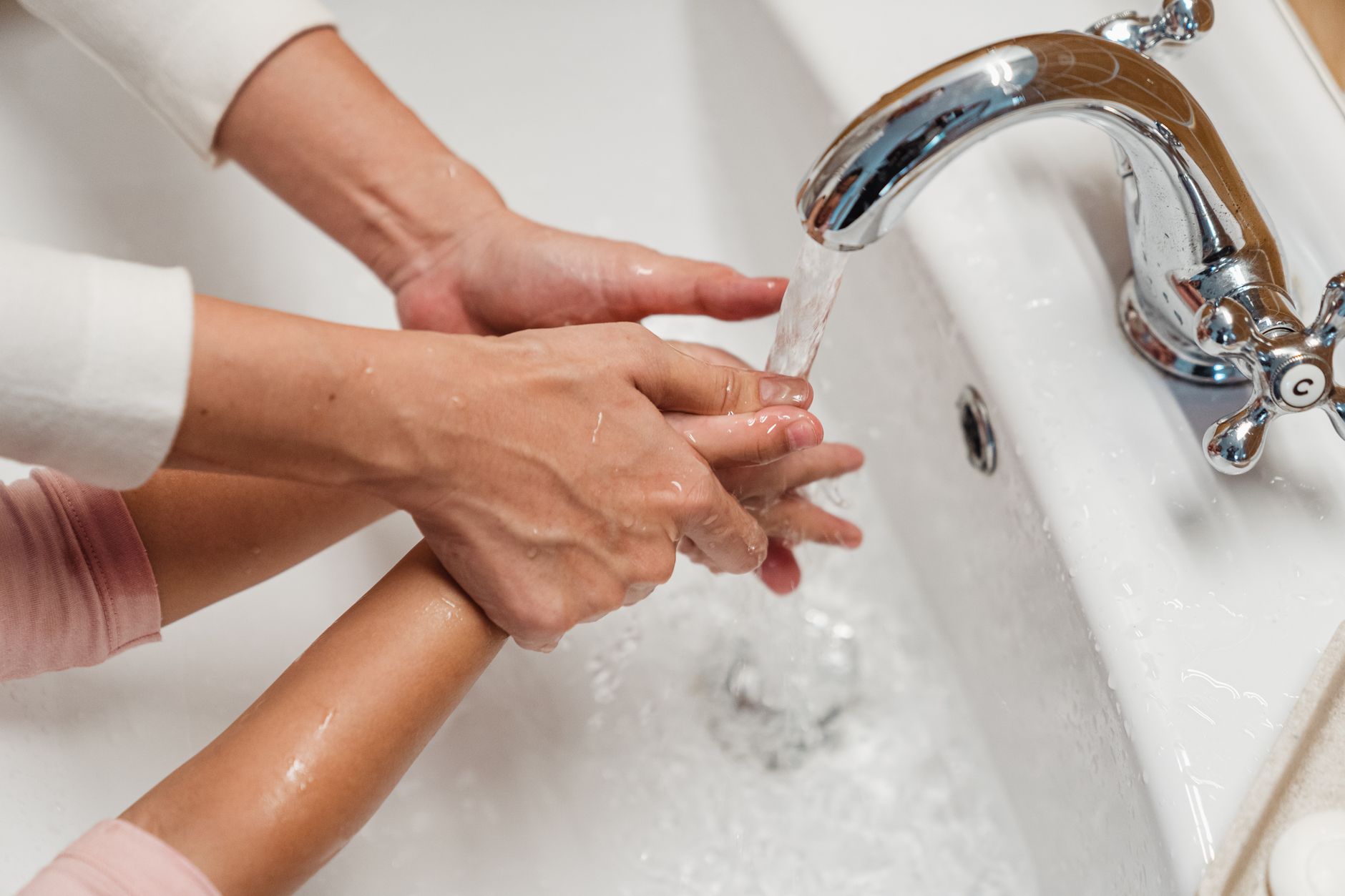
The question “why would God care about bodily functions?” rests on a misunderstanding of what the law is doing. Washing before prayer marks a transition, physically marking the shift from ordinary activity to the conscious act of standing before God. The body is involved because the person is embodied. The involvement is the recognition that embodied beings relate to the sacred through embodied practice, rather than an insult to the body.
The Quran establishes that purification of the body is paired with purification of the heart, and that the value of the practice lies in the integration of the two:
The verse ends the same passage that addresses menstruation. The pairing of tawwābīn (those who turn back to God in repentance) with mutaṭahhirīn (those who keep themselves pure) frames purity as a positive religious good rather than a defensive avoidance of contamination. The Quran’s word for those who maintain purity is one of approval and divine love, applied to both genders, and naming the practice as a moral virtue rather than a mere ritual technicality.
The embodied practice of purification is not unique to Islam. Ritual washing appears in Judaism (mikveh), in Shinto purification rites, in Christian baptismal and pre-Eucharistic practices. The human instinct to mark the transition to sacred activity through physical preparation is neither primitive nor arbitrary. It is the recognition that the whole person (body and soul) is involved in the encounter with the divine.

Where the honest difficulty lies
It is honest to acknowledge that some applications of purity law in Muslim cultures (restrictions on menstruating women entering mosques in some traditions, certain strictures around physical contact) reflect cultural accretions that go beyond what the texts strictly require and that have caused real discomfort and shame for women. The tradition is not uniform on these questions; there is genuine jurisprudential debate about what the law requires and what is cultural interpretation layered on top of it.
The shame that some women feel around menstruation in Muslim contexts is not the teaching of the Quran. The Quran’s treatment is direct, dignified, and oriented toward the woman’s wellbeing. The shame is a product of how the topic has been handled (or not handled) in communities where bodily matters are treated as unmentionable. That is a failure of formation and pedagogy, not a feature of the law itself.
The framework
The Islamic treatment of menstruation, when read from the Quran and the Prophet’s example rather than from the worst cultural practices that later developed around them, is one of compassion, exemption, and dignified inclusion. The menstruating woman is exempt from obligations she would otherwise carry. She is not banished from the home or the family. The Prophet himself reclined in his menstruating wife’s lap and recited the Quran from there. The practices in some Muslim communities that have made women feel ashamed of their bodies during menstruation are practices in violation of this record, not expressions of it. The remedy for those practices runs through the same texts the practices have failed to honour.