Critics often assemble a list: inheritance ratios, testimony rules, divorce asymmetries, polygyny, and difficult hadith. The conclusion is then announced in advance: Islam encodes male advantage into divine law. The case gains rhetorical force by isolating rulings from the system of duties, protections, and social assumptions in which they operate. A fair reading requires a wider frame.
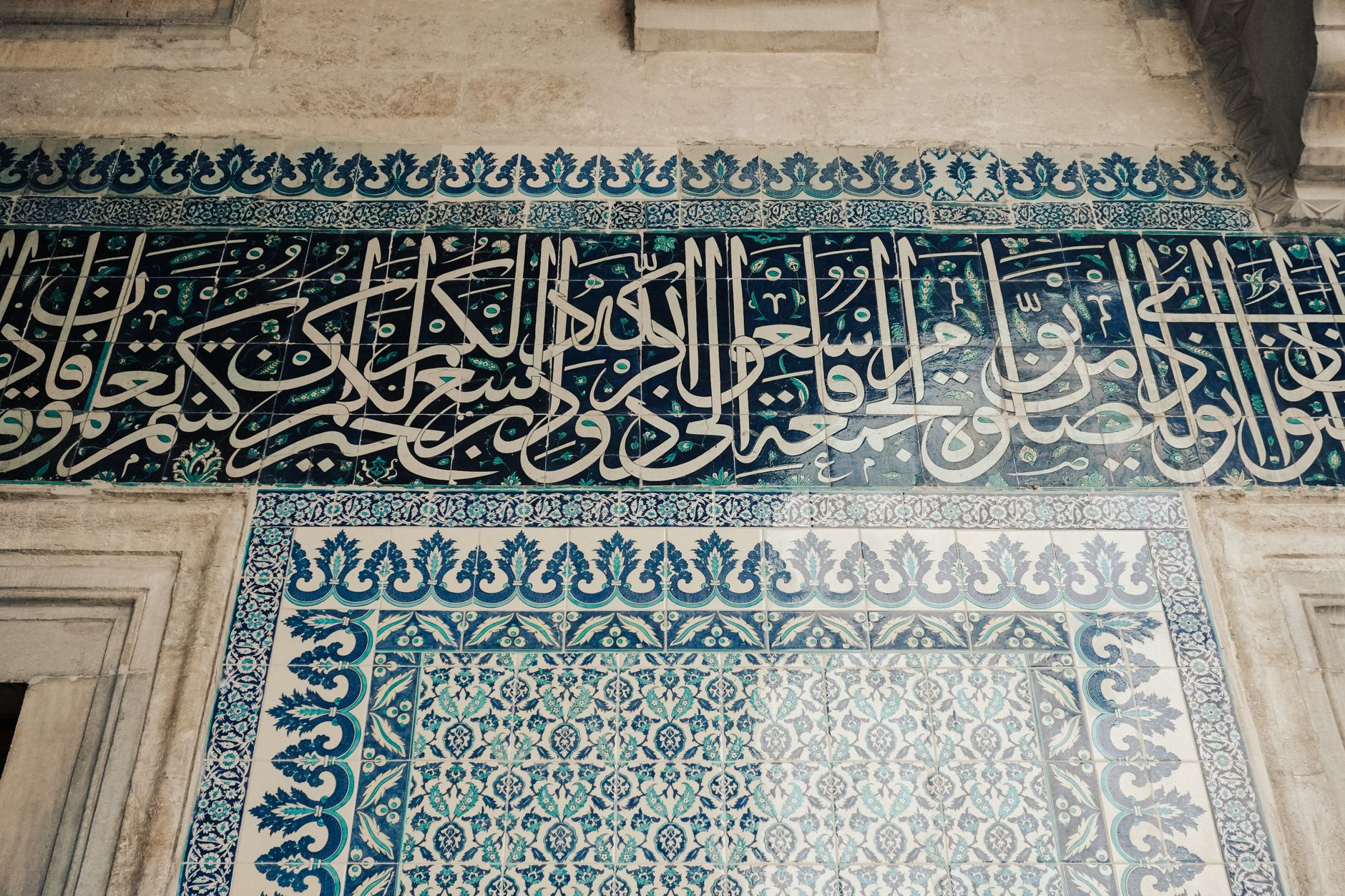
Equality of worth, difference of burden
The Quran grounds men and women alike in creation, accountability, worship, moral agency, and reward. It never suggests that women are spiritually secondary. The legal differences that exist therefore have to be read as functional allocations within a social order, rather than as declarations of lesser human worth.
The Quran is explicit on this point in the strongest possible terms:
The verse is structurally important. The reward and the recognition of righteous action are tied to the action and the faith, not to the gender of the actor. The grammatical pairing min dhakarin aw unthā (whether male or female) is deliberate. The Quran could have addressed the believer in the masculine alone (the default in Arabic grammar). The text instead names both genders explicitly, which carries the force of the structural claim: the moral and spiritual standing of women before God is the same as that of men. The differences that follow in legal arrangements operate within this prior equality, not against it.
Inheritance and financial obligation
The famous inheritance rule is often quoted without the matching rule of maintenance. In classical Islamic law, men carried binding financial duties toward wives, children, and often wider kin. Women’s property, by contrast, remained their own. In that architecture, a larger male share did not simply enrich men. It tracked larger enforceable obligations. The rule can be debated today in societies where economic structures have shifted. It cannot be honestly described as a bare statement that women matter less.
Testimony and legal context
The verse addresses a single domain: commercial debt documentation. The wider context (the longest verse in the Quran, often called āyat al-mudāyanah, the verse of debt) concerns the recording, witnessing, and verification of financial obligations. The instruction about witnesses applies specifically to that setting. Testimony in other areas of Islamic law follows different rules.
The reason given in the verse for the two-women-equal-one-man ratio is also specific. The text states that the second woman is present so that “if one of them errs, the other can remind her.” Classical commentators including al-Ṭabarī and al-Qurṭubī read this as a reflection of seventh-century social reality: women in that society were rarely involved in commercial transactions, lacked routine exposure to debt instruments, and could be expected to be less familiar with the conventions than men whose daily lives revolved around such dealings. The function of the second witness is therefore corrective and contextual. It addresses a specific gap in commercial expertise. The ruling does not encode a claim about general intellectual capacity.
Classical Islamic jurisprudence recognised this and did not generalise the ratio across the whole field of testimony. Women’s testimony was accepted on equal terms in matters where female witnesses were the appropriate or sole reliable source: questions of childbirth, breastfeeding, women’s bodily concerns, and other domains of female social experience. Some jurists accepted women’s testimony in criminal matters with no ratio adjustment.
The Ḥanafī school accepted women’s testimony in most areas of contractual and financial law as long as a male witness was also present. Classical jurists treated the ratio in 2:282 as a contextual rule for a contextual setting. The global statement about female cognitive worth has to be imported from outside the verse to make the modern critique work.
The contemporary critique generalises the ratio across all testimony and reads it as a Quranic declaration of female mental inferiority. The generalisation is a reading the text does not support and the classical tradition explicitly rejected. The verse addresses commercial debt documentation, gives a contextual reason for its ruling, and was applied by classical jurists in exactly the narrow setting it specifies.

Marriage, divorce, and asymmetry
Marriage law also reflects asymmetry because duties were asymmetrical. Men owed mahr (the bridal gift, paid by the husband to the wife and remaining her property) and ongoing maintenance. Women were not charged with maintaining households financially. The structure helps explain differences in divorce mechanisms and the permission of polygyny under severe moral conditions. Abuse of those permissions is real and widespread. Abuse, however, is not the same as the legal and moral theory of the system itself.
The difficult hadith about women being deficient in reason and religion must likewise be read in context. Classical scholars explained the phrase through the specific legal matters of menstruation and testimony in one setting, rather than through a doctrine that women are intrinsically foolish. The hadith is often weaponised in ways far more sweeping than the tradition itself requires.

The Prophet on the treatment of women
The Prophet ﷺ established the moral standard for the treatment of women with extraordinary directness in his farewell sermon, the most public address of his prophetic career, delivered before the largest assembly of Muslims he ever spoke to:
The hadith is one of the most cited prophetic teachings on the subject. Its context is the farewell sermon, which abolished pre-Islamic tribal customs that disadvantaged women and replaced them with explicit requirements of care, kindness, and protection. A tradition whose Prophet’s last public instruction included this command cannot coherently be claimed as a tradition designed to disadvantage women. The instruction is universal, addressed to the entire community, and has shaped Islamic legal and ethical reasoning about marriage and family for fourteen centuries.
The larger verdict
The Islamic system is best understood as one of reciprocal rights and differentiated burdens ordered toward family stability, chastity, provision, and justice. The system can be misapplied. Some of its historical applications deserve criticism. The claim that God cares less for women than for men does not follow. In Islam, law serves the moral order established by the Creator, and men and women stand before Him with equal human dignity even where some legal functions differ.
The concept of khalīfah applies to women and men equally. The Quran appoints humanity (not men alone) as God’s vicegerent on earth. Both stand before God as moral agents, equally accountable, equally capable of fulfilling or betraying the divine trust. The jurisprudential differences in specific rulings must be read within this framework of shared moral dignity grounded in tawḥīd, not against it.
The Islamic framework begins with tawḥīd: one God, before whom every human being stands as khalīfah (vicegerent, moral agent, bearer of the divine trust). The status is not gendered. The Quran addresses men and women as equal in creation, equal in accountability, equal in spiritual dignity. The jurisprudential differences that exist in Islamic law are functional, not ontological. They do not compromise the fundamental equality of the khalīfah before God.