The evidence for biological evolution is overwhelming. The fossil record, comparative genomics, embryology, observed speciation, and molecular phylogenetics all converge on the same conclusion: life on earth diversified over billions of years through processes including natural selection, genetic drift, and mutation. Human beings share common ancestry with other primates. This is one of the most thoroughly confirmed findings in the history of science, rather than a tentative hypothesis.
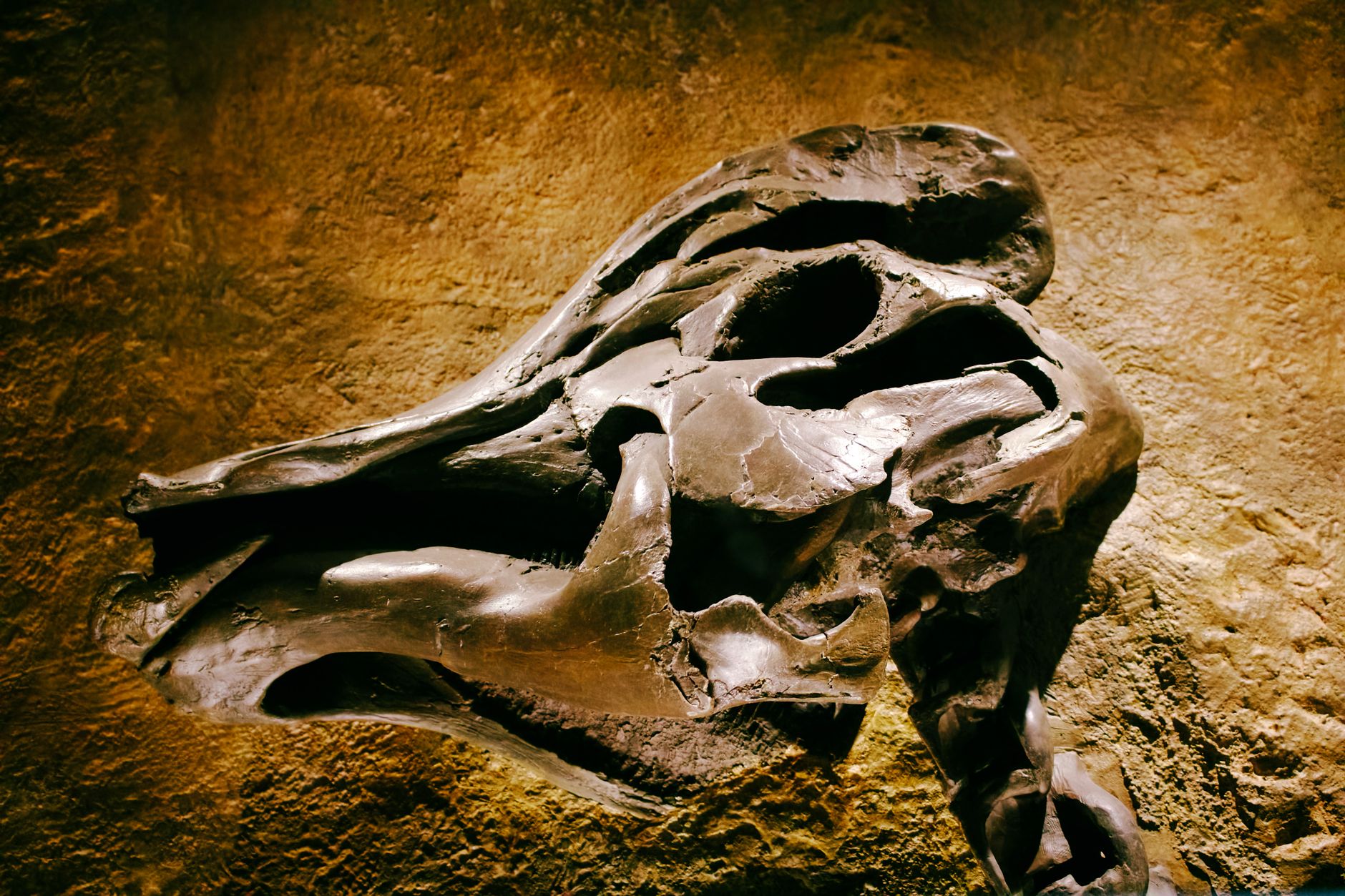
The question for a Muslim is what evolution means within a theistic framework, and whether the Islamic account of human creation and purpose is threatened by it, rather than whether to accept or reject the evidence. The Quran itself commands investigation of the natural world. The Islamic account is not threatened.
Evolution as God’s sunan in the biological world
The Islamic philosophical tradition holds that nature operates according to God’s sunan: His immutable patterns implanted in creation. The laws of physics are sunan. The laws of chemistry are sunan. The mechanisms by which life diversifies and adapts (natural selection, mutation, speciation) are sunan too. They are patterned, lawful, and discoverable precisely because their Author is one and does not change His way, rather than random in the sense of being purposeless.
When a biologist describes how a population adapts to its environment through differential survival and reproduction, he is describing a pattern. When he maps the genetic relationships between species across deep time, he is discovering an order. That order is not self-explanatory. It presupposes a cosmos (a lawful, structured, investigable reality) rather than a chaos. The Muslim who studies evolution is doing what the Quran repeatedly commands: looking at creation and recognising the signs of its Creator.
The word “undirected” is philosophy, not science
The claim that evolution is “undirected” or “purposeless” is a philosophical interpretation added on top of the biology, rather than a finding of biology. Natural selection does not require a laboratory declaration about whether God exists. It describes a mechanism: organisms with traits better suited to their environment are more likely to reproduce. That mechanism operates. The question of whether the mechanism itself was designed (whether the physical laws that make it possible were calibrated for the emergence of conscious life) is a question science does not and cannot answer.
The fine-tuning of the universe for the existence of complex chemistry, stable stars, carbon-based life, and eventually conscious beings is a datum that sits alongside evolution rather than beneath it. A God who set the initial conditions of the universe such that His sunan would, over billions of years, produce beings capable of knowing Him and choosing to serve Him is not refuted by the discovery of the mechanism. He is illuminated by it.
Adam: biological specimen or bearer of the trust?
The Quran describes the creation of Adam in several passages:
The Quranic emphasis is on what that human was for, rather than on the biological mechanism by which the first human was produced. Adam is khalīfah: God’s vicegerent on earth, the being through whom the divine moral will can be freely realised. The angels objected: this creature will shed blood and cause corruption. God answered: “I know what you do not know.” What God knew was that a being capable of moral action in freedom (capable of choosing good when evil is possible) stands higher than beings who obey by necessity.
The trust (amānah) that the heavens and earth refused is the moral law. Nature fulfils God’s will by necessity; natural law cannot be violated by nature. Man fulfils it by choice. That is his distinction. That is his cosmic vocation. And that vocation is entirely independent of whether his body arrived through a long chain of biological ancestry or an instantaneous act of creation.
The unity of truth
The Islamic principle of the unity of truth holds that revelation and reason cannot ultimately contradict each other. God authored both the Quran and the natural world. If a scientific finding appears to conflict with a Quranic passage, the contradiction is in our understanding, rather than in reality. The Quran itself instructs: investigate, reflect, use your reason.
Classical Quranic exegesis read the Adam passages as describing direct, special creation, and in the absence of evolutionary science, this was the natural reading. Contemporary Muslim scholars working with the full weight of the biological evidence have proposed readings in which Adam represents the first being to receive the divine spirit (rūḥ) and moral consciousness, the first khalīfah, rather than the first biologically modern human. On this reading, Adam marks the beginning of human moral history rather than the absence of evolutionary ancestors.
Whether this interpretive move is legitimate is a question about the scope of Quranic hermeneutics, not about the science. The tradition has always recognised that Quranic passages may carry meanings beyond their most apparent sense, and the scholars who explored those meanings were not modernist compromisers but the classical giants of tafsīr. The unity of truth demands that we hold both the evidence and the revelation seriously, and that we do not sacrifice either to protect the other from difficulty.
The Prophet on the pursuit of knowledge
The Prophet ﷺ established the seeking of knowledge as a binding religious duty:
The hadith covers every domain in which knowledge can be acquired honestly. Biological science, on the Islamic understanding, is one of the routes through which the human creature comes to recognise the patterns of God’s creation. The Muslim who refuses to engage the scientific evidence on principle is in violation of the hadith’s instruction. The Muslim who engages the evidence carefully, with both intellectual rigour and theological depth, is doing what the tradition has always asked.
What evolution actually threatens, and what it does not
Evolution does not threaten tawḥīd. A universe in which God creates through patient, lawful, discoverable processes is more coherent with His attributes (wisdom, knowledge, design) than a universe in which He acts arbitrarily. The Quran describes a God whose creation is purposive, patterned, and good. Evolution is consistent with all three.
Evolution does not threaten man’s moral status. If anything, it deepens it. That conscious, morally accountable beings emerged from a cosmos of hydrogen and gravity (through billions of years of pattern-following) is an argument for staggering purposiveness rather than meaninglessness. The universe was set up, from its first instant, to produce beings capable of knowing God. That the process took time does not diminish the result. It magnifies the scale of the design.
What evolution does threaten is a particular style of reading scripture, one that treats every passage as a literal, mechanistic description and refuses to consider any other register. Islam has never been committed to that style. The Quran speaks in parable, metaphor, allusion, and layered meaning. Its purpose is to orient the human being toward God, toward moral accountability, toward the recognition that his existence is not accidental and his choices are not without consequence, rather than to replace science.
The Muslim who accepts evolutionary science is trusting that God’s two books (revelation and creation) do not lie, and that the apparent tension between them is an invitation to deeper understanding rather than a reason for intellectual surrender.