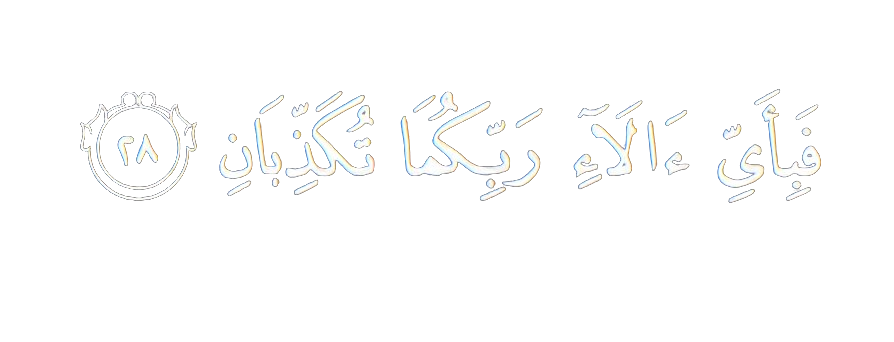
فَبِأَيِّ آلَاءِ رَبِّكُمَا تُكَذِّبَانِ

Then which of the favours of your Lord will you deny?

Surah Ar-Rahman (55:13)

Honest, evidence-based inquiry into the questions that matter most — written for where you actually are.

Try asking —

Top Questions

The most commonly asked questions about Islam, God, and existence.

Browse questions →

Reader Q&A

Real questions submitted by readers, answered with care.

Read answers →

What's New

Our most recently published articles and answers.

See latest →

Ask a Question

Can't find what you're looking for? Submit your question directly.

Ask now →

What this site is

Compelling Evidence is a long-running attempt to take the strongest objections against Islam — and against belief in God in general — and weigh them honestly against what the available evidence supports. The work is written for the curious, the doubtful, and the unconvinced. It does not assume agreement, and it does not pretend to certainty that the evidence does not actually furnish.

The premise

Most material on contested religious questions falls into one of two camps. The first preaches to the convinced — comfortable, confident, allergic to genuine difficulty. The second weaponises difficulty against the other side without applying the same scrutiny to its own foundations. Neither serves the inquirer who actually wants to think a question through. The premise here is that careful argument, applied evenhandedly, has a better chance of arriving at something true than either confident assertion or rhetorical attack.

The method

Each article begins with a question — usually a hard one. The strongest version of the challenge is stated first, in the form a thoughtful sceptic would actually present it. Then the relevant evidence is laid out: historical sources, philosophical arguments, scientific findings, classical scholarly responses where they exist. Where the evidence cuts cleanly in one direction, that direction is named. Where the evidence is genuinely contested, the contestation is named. Where the evidence is thin, the thinness is named. Specific claims are tied to specific sources; rhetorical flourishes are kept to a minimum.

What the work covers

The 120 articles are organised across eleven investigative topics. The existence of God: cosmological arguments, fine-tuning, ontological reasoning. The problem of evil: classical theodicies, modern objections, the evidential case from suffering. Ethics without God: whether the moral law can be grounded without theism, and what classical Islamic ethical thought brings to the question. Science and evidence: how religious claims interact with the empirical record, including the cosmological and biological details that recur in apologetic argument.

On the Islamic side specifically: the Quran and its sources, including its preservation history, literary form, internal structure, and engagement with prior scriptures. History, context, and comparison — situating early Islam within late antiquity, addressing the harder questions about the Prophet's life and the formation of the early community. Divine justice and fairness — the questions about hell, eternal punishment, predestination, and the moral architecture of the Islamic worldview. Islamic practice and ritual, examined for its rationale rather than presented as self-evident. Rights and freedom: the harder questions about religious liberty, apostasy, and how Islamic law has actually addressed these across the centuries. The inner journey, for readers who are wrestling with belief from the inside. Revelation and meaning, on the deeper question of why any of this should matter.

Who this is for

The audience is the honest inquirer — not the polemicist on either side. Atheists who want to know what the strongest version of the religious case actually looks like. Christians and other monotheists comparing claims across traditions. Muslims wrestling with hard questions and wanting to find them addressed seriously rather than waved away. Anyone who has noticed that the loudest voices in this discussion are rarely the most careful ones, and who would like an alternative.

Articles can be read individually — each is self-contained — or followed in their canonical sequence, which builds an cumulative argument across topics. New material is added regularly. The site is free, contains no advertising, and tracks no readers across sessions.

A note on tone: the work tries to be plainspoken without being casual, careful without being timid, and serious without being heavy-handed. Religious questions matter to people in ways that other questions do not, and that fact deserves respect on every side. Atheist readers should not feel patronised; Muslim readers should not feel that their tradition is being defended badly; readers from other backgrounds should be able to follow the arguments without prior commitment to any of them. Whether the work succeeds at this is for readers to judge — but the attempt, at least, is sincere.

Browse all 120 articles →

What are you searching for?

Honest engagement with the strongest objections to belief — approached with reason, evidence, and intellectual integrity.

Does God Exist?

The God Who Cannot Not Exist

The ontological argument for God's existence has been dismissed and reformulated for nine centuries. In its contemporary form, it remains one of the most disputed — and most serious — arguments in philosophy.

Read more

Does God Exist?

If Your Brain Is Just Atoms, Can You Trust It?

The naturalist claims that the human mind is entirely the product of blind evolutionary processes. But if that is true, why should we trust our minds on the questions evolution has no interest in — including the question of whether naturalism is true?

Read more

Science & Evidence

The One Thing Neuroscience Cannot Explain

Neuroscience can tell us which brain regions activate during different experiences. It cannot tell us why there is any experience at all. This gap — the Hard Problem of Consciousness — is one of the deepest unsolved problems in all of science.

Read more

Ethics Without God?

Where Do Moral Facts Live?

Most people behave as though moral facts are real — as though torturing children for entertainment is not just something they personally dislike, but something genuinely wrong. Where do those facts come from, and what grounds them?

Read more

Ethics Without God?

Can You Ground Ethics Without God?

The secular humanist argues that we need no God to live ethically — that compassion, reason, and human solidarity are sufficient foundations. The argument is partly right. The part where it falls short is the part that matters most.

Read more

Ethics Without God?

Is Morality Just Opinion?

Moral relativism — the view that there are no universal moral truths, only cultural conventions — sounds tolerant. On examination, it is self-refuting, practically unliveable, and unable to support the very values it is typically invoked to protect.

Read more

Your personalised path

Where are you starting from?

Not a generic introduction — an argument written for someone exactly like you. Ten questions. Two minutes.

Want to ask more questions?

Whether you are a convinced atheist, an agnostic, a scientist, a sceptic, or someone carrying doubts you have never voiced — this is for you. Every question deserves a serious answer, not a rehearsed one.
400+ Verses in the Quran addressing disbelievers directly
1080 Atoms in the observable universe
1.9B Muslims asking the same questions
Reasons to keep seeking truth