The objection has a sharp formulation: an infinite God who needs anything — including worship, praise, or belief — is not truly infinite. A God who punishes disbelief is a God with an ego problem. The worship requirement sounds less like the command of an unlimited being and more like the demand of an insecure one.
This objection is worth taking seriously because it rests on a genuine philosophical intuition — that a truly unlimited God would not be diminished by human disbelief and would not need anything from human beings. The objection is correct as far as it goes. Where it goes wrong is in what it concludes from that observation.
God does not need worship
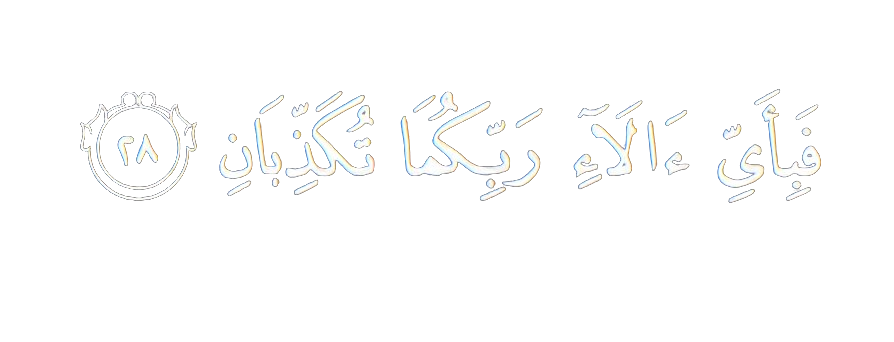
The Islamic theological tradition is explicit on this point. God is Al-Samad — the eternally self-sufficient. God does not need anything from His creation. Human worship adds nothing to God, and human disbelief subtracts nothing. The Quran states this directly: “If you are ungrateful, God has no need of you; yet He is not pleased by ingratitude in His servants. If you are grateful, He is pleased by that in you.” The pleasure is not the satisfaction of a need. It is the response of a good being to the good behaviour of the beings it loves.
The command to worship is not for God’s benefit. It is for ours.
What worship does for the worshipper
Consider what happens to a conscious being who spends a life in recognition of its own contingency — who lives in awareness that it exists by the gift of another, that its consciousness is not self-produced, that the moral order it navigates is not of its own invention. That being lives with a kind of rootedness and proportion that is difficult to access otherwise. The practice of worship — prayer, remembrance, orientation toward something greater than oneself — is the practice of maintaining that rootedness against the constant human temptation toward the illusion of self-sufficiency.
Conversely, consider what happens to a conscious being that lives as though it is the source of its own existence, the author of its own values, the ultimate reference point for its own judgements. That being is not liberated — it is inflated. And inflation, in the psychological sense, produces the very fragility it is meant to avoid: the collapse that comes when circumstances make the illusion of self-sufficiency impossible to maintain.
The question of compulsion
The Quran is explicit that there is no compulsion in religion. Belief that is compelled is not belief — it is performance. God’s interest, on the Islamic account, is in genuine recognition — in the consciousness that freely turns toward its source, not in the behaviour that fear or social pressure produces. The existence of apostasy laws in various historical contexts reflects human political interests, not divine ones. A God who knows what is in every heart has no need of enforced profession.
Worship, on this account, is not a tribute paid to a powerful ruler. It is the natural response of a being that has genuinely understood its situation — that has grasped what it is, where it came from, and what it is oriented toward. The command to worship is not “satisfy My need for your praise.” It is “turn toward what is actually real, and see what happens to the rest of your life when you do.”