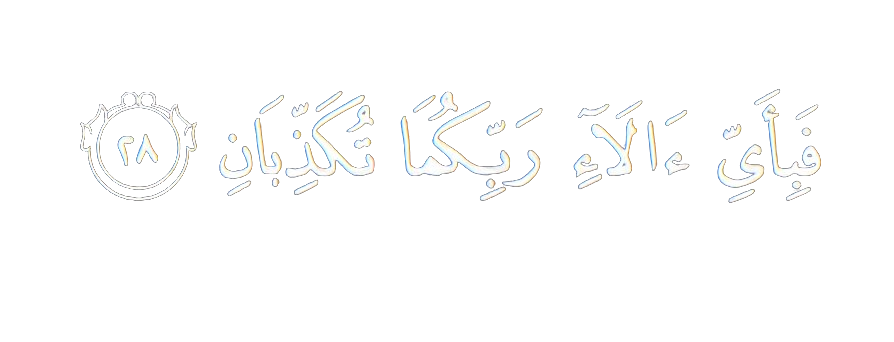
The question is not rhetorical. It is one of the most persistent objections to the Islamic picture of God, and it comes from a genuine moral intuition: that a being of unlimited mercy and goodness would not subject finite creatures to infinite punishment for finite actions. If God is as compassionate as the tradition claims — Al-Rahman, Al-Rahim, the Most Merciful, the Most Compassionate — how is hellfire reconcilable with those attributes?
This is a real question. It deserves a real answer, not a retreat into “God’s ways are not our ways” — which, while true as far as it goes, is not an answer but an evasion.
What the question assumes
The question typically assumes that hell is God imposing suffering on unwilling subjects as punishment — a kind of divine retribution that seems disproportionate regardless of the crime. On this picture, hell is something God does to people despite their resistance. If that picture were accurate, the moral objection would have genuine force.
But the Islamic tradition’s most serious account of hell is different. Hell is not primarily imposed from outside. It is the culmination of a freely chosen orientation. The being who encounters God at the end of a life spent in the conscious rejection of everything God represents — truth, beauty, goodness, love, justice — does not encounter punishment arbitrarily assigned. They encounter the logical conclusion of what they have chosen to become.
The philosopher C.S. Lewis — who spent years as an atheist and thought seriously about this — put it this way: in the end, there are only two kinds of people. Those who say to God “thy will be done,” and those to whom God says, in the end, “thy will be done.” Hell is the place of those whose will, fully carried out, has produced the self they chose to be.
Is eternal punishment proportionate?
The proportionality objection — that finite actions cannot merit infinite consequences — is serious and has been taken seriously by Islamic theologians. Several responses are worth considering.
First, the duration of consequences is not determined only by the duration of the act but by the nature of what was damaged and the nature of the act itself. Rejecting the ground of all being — the source of your own existence, consciousness, and moral capacity — is not a finite offence in the way that a finite harm to a finite person is. It is a rejection of the absolute. Its consequences may not be measured by the same scale as its duration.
Second, and more importantly, the Islamic account does not suggest that all who sin face eternal punishment. The tradition is explicit that God’s mercy is vast — that forgiveness is available, that sincere return is always possible, that the scales of divine justice account for intention and circumstance in ways human courts cannot. The hellfire question is most acute for the one who encounters God having spent a lifetime in deliberate rejection and never sought return. And even there, the tradition maintains that God’s mercy is greater than human justice would require.
The deeper question
Behind the hellfire objection is often a more fundamental question: does it make sense for a good God to create beings who might end up in hell? If God knew some would reject Him, why create them?
This question points toward the mystery of freedom. A world of beings who cannot reject God — who are constitutively incapable of turning away — is a world without genuine love, genuine moral growth, or genuine relationship. The capacity to reject is the same capacity that makes genuine acceptance meaningful. The risk of hell is the same risk as the possibility of genuine love. A God who eliminated one would have to eliminate both.